How We Develop Software
We work as your technology partner. Before we plan anything, we learn how your business actually runs, because that is what makes a solution fit. From there, you get an Agile process you can watch in real time. We follow two governed lifecycles: SDLC for conventional software and ADLC for AI systems. You stay involved at every stage and see the same reports and budget breakdowns we do.





Process transparency and control
Regular reports
You get a written progress report at the end of every sprint, plus a monthly summary. We will match whatever reporting format your team already runs on. Each report covers what closed and what moved, with the effect on the timeline spelled out.
24/7 project status access
Your project lives in Jira, and you get an account on day one. Check task status or the current backlog whenever you want. Nothing is gated behind a weekly call, and no work happens off the board.
Transparent planning
Before development starts, we build the estimate and the schedule together with you. The estimate breaks down by functionality, so you can see what each feature costs before you commit to it. If you want to change the mix, you have the numbers to do it.
Deadline and timeline adherence
We commit to the dates we agree on. We plan and monitor closely to ensure delivery stays on schedule. When something threatens a date, you hear it from us early, along with the options for handling it.
Open communication
Your project manager stays reachable on the channels your team already uses, from email to Slack. We hold regular status calls and answer questions on the same working day.
Schedule a discovery call
Let’s discuss how our workflow fits your specific needs.
Agile frameworks we follow
Sprints last 2 to 4 weeks and end with a working release.
We open with Sprint 0, a planning phase we run together. In it, we build the product backlog, agree on the release plan, set the number and length of sprints, and put together a prototype of the key system components.
Then the delivery cycle starts. Each sprint carries its own analysis, design, development, testing, and deployment of new functionality. When the last sprint closes, we release the final product and move into production support if you want it.
Then the team begins the development cycle: each sprint includes analysis, design, development, testing, and deployment of new functionality. Upon completion of all sprints, we release the final product and, if necessary, provide production support.
For Kanban, we map the workflow on a board and pull new tasks only when capacity frees up.
A WIP limit is a hard cap on how many tasks can be open at once, which stops a team from starting five things and finishing none. Service classes are a priority scheme. Expedite covers production incidents, Fixed Date covers contractual or regulatory deadlines, Standard covers regular backlog work, and Intangible covers maintenance with no hard due date.
We structure the Jira board around the real stages of your process, with explicit transition policies. The team runs short daily syncs at the board. We refill the incoming queue with you on a set cadence and hold delivery reviews with your operations people.
This mode fits work that arrives irregularly: product support and evolution, integration and infrastructure work, DevOps, and backlog preparation. Releases go out when they are ready, without waiting for a sprint boundary.
We structure our process in Jira to reflect real stages, with WIP limits and explicit transition policies. We use service classes (Expedite, Fixed Date, Standard, Intangible), short daily syncs at the board, regular replenishment of the incoming pool with the customer, and periodic delivery and ops reviews. This mode enables continuous releases as they are ready, without waiting for the end of a sprint.
Our goal is software that produces a measurable business result. We build long-term relationships with our clients, and we stay accountable for outcomes after launch.

How we deliver: Two governed lifecycles
We deliver software two ways, and the same transparency and quality discipline guides both.
Conventional software goes through our SDLC, which is the Agile process above, now AI-augmented.
AI and agentic systems go through our ADLC, the Agentic Development Lifecycle, which adds the controls that probabilistic systems need. We pick the lifecycle that fits your project, and we tell you which one we picked and why.
SDLC: conventional software, AI-augmented
Our SDLC covers the Scrum and Kanban modes above, along with the full-cycle steps below. Inside it, engineers use AI coding and code-review assistants as an acceleration layer.
The gains there are modest. Independent measurement puts delivery-level improvement in the high single digits on complex engineering work, far below what tool vendors advertise. Our engineers review every line before it merges, and the same code review rules apply whether a person or an assistant wrote the first draft.
ADLC: AI and agentic systems
LLM and agentic systems behave differently from deterministic software. They interpret input and pull in context, then produce output that varies between runs. Our ADLC adds seven governed phases to handle that.
Which one applies to you
Deterministic software runs on our SDLC. AI and agentic systems run on our ADLC. Both get the same reporting, communication, QA discipline, and board access described on this page.
Quality assurance and knowledge sharing
Rigorous testing
Every SumatoSoft team includes QA engine ers who test each release, both manually and through automated tests. Coverage runs across functional, security, performance, and integration checks. We catch and fix defects before the product reaches production.
For AI work, QA also runs evaluation harnesses and guardrail checks, as described in the ADLC section above.

Code review and technical audit
An experienced developer or the team’s tech lead reviews every change before it merges. Pair programming and code revisions give us an additional check on quality against our internal standards. The technical project manager assesses architecture and key technical decisions, thereby catching risks early.

Documentation and knowledge base
We document requirements, designs, API descriptions, and deployment instructions all live in one knowledge base and stay current. Knowledge sharing across the team ensures the project context survives a staffing change.

Team qualifications and experience
Our engineers and managers bring real domain experience, and an internal mentoring program keeps that expertise growing. Client satisfaction runs above 98%, and many engagements continue for years.

Full cycle development
We can handle any stage of the process. You can sign up for the entire cycle or just the part you need. When we run the full cycle, we take responsibility for the result and support the product across its lifecycle.
We study your goals and constraints, then propose the solution that fits them.
We design the interfaces and the flows people will actually use.
Senior engineers write the code. More than 70% of our team is senior-level.
We test at every stage, so the product works as specified before anyone depends on it.
We deploy into your infrastructure, then support scaling and integration with your business processes.
We organize and store system data so your business can use it.


Get your project timeline
Let us map out the detailed phases for your next solution.
Core tech stack we work with















Ownership and handover
You own the code and the intellectual property outright. At handover, you receive the repositories, documentation, knowledge base, and deployment instructions. There is no proprietary lock-in and no dependency on us to keep the product running.







Our recent works

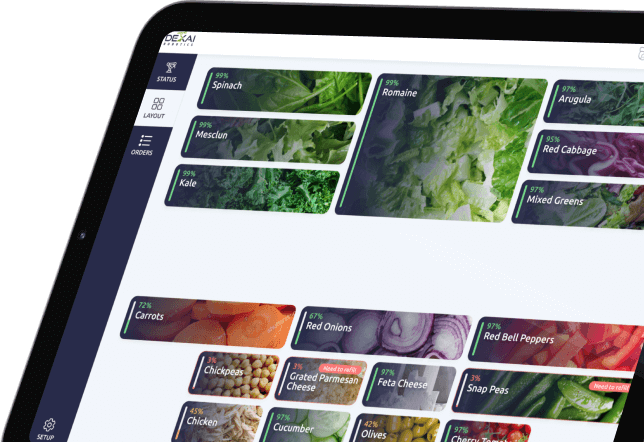
Dexai Robotics: graphical user interface for robot operatio

IoT monitoring PoC for EU cold chain operator


An AI PoC for an online learning platform


We tried another company that one of our partners had used but they didn’t work out. I feel that SumatoSoft does a better investigation of what we’re asking for. They tell us how they plan to do a task and ask if that works for us. We chose them because their method worked with us.

SumatoSoft is the firm to work with if you want to keep up to high standards. The professional workflows they stick to result in exceptional quality.
Important, they help you think with the business logic of your application and they don’t blindly follow what you are saying. Which is super important. Overall, great skills, good communication, and happy with the results so far.

Together with the team, we have turned the MVP version of the service into a modern full-featured platform for online marketers. We are very satisfied with the work the SumatoSoft team has performed, and we would like to highlight the high level of technical expertise, coherence and efficiency of communication and flexibility in work.
We can confidently say that SumatoSoft has put all our ideas into practice.

We are absolutely convinced that cooperation between companies is only successful when based on effective teamwork (and Captain Obvious is on our side!). But the teams may vary on the degree of their cohesion.

They are very sharp and have a high-quality team. I expect quality from people, and they have the kind of team I can work with. They were upfront about everything that needed to be done.
I appreciated that the cost of the project turned out to be smaller than what we expected because they made some very good suggestions. They are very pleasant to work with.

Rivalfox had the pleasure to work with SumatoSoft in building out core portions of our product, and the results really couldn’t have been better.
SumatoSoft provided us with engineering expertise, enthusiasm and great people that were focused on creating quality features quickly.

We’d like to thank SumatoSoft for the exceptional technical services provided for our business. It should be noted that we started our project’s development with another team, but the communication and the development process in general were not transparent and on schedule. It resulted in a low-quality final product.

SumatoSoft succeeded in building a more manageable solution that is much easier to maintain. Their project management reflects the excellence of a larger company. Their team delivers high-quality results, attentive service, and reasonable pricing.

When looking for a strategic IT-partner for the development of a corporate ERP solution, we chose SumatoSoft. The company proved itself a reliable provider of IT services.

Thanks to SumatoSoft’s can-do attitude, amazing work ethic, and willingness to tackle clients’ problems as their own, they’ve become an integral part of our team. We’ve been truly impressed with their professionalism and performance and continue to work with the team on developing new applications.
We are completely satisfied with the results of our cooperation and will be happy to recommend SumatoSoft as a reliable and competent partner for development of web-based solutions

We’ve been working with SumatoSoft for a few years, starting from the initial monitoring system, so they already understood our environment quite well. At the same time, they still managed to surprise us with their professionalism.

Working with SumatoSoft has been an outstanding experience. Their team is not only highly skilled but also incredibly responsive, collaborative, and committed to delivering quality results. I can’t recommend them enough! Thank you team SumatoSoft for bringing my vision to life.

We had already invested in AI, but the output was unclear. There were multiple initiatives across the company, each showing some promise, but no clear way to evaluate them or connect them to business outcomes.

Frequently asked questions
How does a project start with SumatoSoft?
It starts with a discovery phase. We hold a kickoff call, then work with you to map the scope and build the product backlog. From there, we produce a time-and-effort estimate broken down by functionality, along with a project schedule. You approve both before development begins. Discovery can run anywhere from a few days to several weeks, depending on the project’s size and level of definition.
How will you keep me informed?
Through written reports and direct access to the project board. You get a progress report at the end of every sprint and a monthly summary. You also get a Jira account from day one, so you can check task status and the backlog yourself at any hour. Your project manager holds regular status calls and answers questions on the same working day.
How do you handle changes to scope?
Iteratively, which is the point of running Agile. In Scrum, changes enter the backlog and get prioritized into an upcoming sprint. For irregular work, our Kanban mode absorbs it without waiting for a sprint boundary. How a change affects your budget depends on your engagement model, so pick the model that matches how stable your requirements are.
See engagement models.
How do you ensure quality?
With QA engineers on every team and mandatory code review. Each release goes through automated and manual testing, covering functional, security, performance, and integration checks. Another senior developer or the tech lead reviews every code change before it merges. The technical project manager reviews architecture decisions early, where fixing them is cheap.
What is the difference between your SDLC and ADLC?
The SDLC governs deterministic software, and the ADLC governs probabilistic AI systems. Conventional software does the same thing every time, so we test it against expected outputs. AI systems generate different responses to the same input. We score them with evaluation harnesses instead, model token costs, red-team against prompt injection, and monitor for drift after launch. See the detailed development lifecycle and Agentic Development Lifecycle (ADLC).
Let’s start
If you have any questions, email us info@sumatosoft.com




