Custom web software development for AI-ready products
SumatoSoft builds web products that support today’s modern workflows and are ready for AI features. We design and develop secure custom web software and modernize legacy apps by preparing the backend with data flows and APIs needed for copilots, retrieval, automation, and model-driven features.






Why make custom web apps with SumatoSoft?
Our team builds custom web applications for companies across industries and regions. We choose the technology stack based on business logic, scale, integration constraints, and long-term support requirements.
We use our ADLC alongside the standard web development process. We define the use case, prepare the data and retrieval layer, set evaluation criteria, and add monitoring. This helps reduce rework and makes it easier to move AI features from PoC to production.

30% less time to market with custom web development

25% reduction in project overhead through web consulting

90% success in reviving stalled projects through rescue missions
Custom web application development services
 R&D & Analysis
 UX/UI design
 Backend development
 QA & Testing
R&D & Analysis
Our R&D and business analysis team evaluates your business and ideas before launching development. We define the product scope, reduce market and technical risk, and prepare the system for future growth. If AI is part of the plan, we use ADLC from the start. We define where AI fits in the product, what data it can use, how results will be checked, and what controls the system needs before release.

UX/UI design
We follow a thorough web design approach focused on how people interact with websites, ensuring interfaces are not only user-friendly but also designed for targeted action. The work covers standard web flows and AI-assisted flows when they are in scope. For AI features, we account for response states, approval steps, citation patterns, and user control.

Frontend & Backend development
Our frontend and backend engineers build custom web applications for products ranging in complexity. We focus on stable architecture and maintainable code. When AI is required, we add model-facing services, retrieval flows, orchestration logic, and monitoring via an ADLC-based process, ensuring the AI layer aligns with the product and its operating rules.

QA & Testing
Our QA team joins the project from day one. This lets us test the product as it is built and not after the main work is done. We cover functional quality, performance, security, and cross-device behavior. For AI-enabled features, we also test output quality, grounding, fallback behavior, and the ADLC-defined monitoring rules.

Web applications we develop
We develop web applications tailored to specific business needs. We consider workflows, data structure, access rights, and integrations. If a project requires AI, we build it into the architecture from the start: we define scenarios, restrict data access, and establish quality criteria and control rules.
Enterprise web apps
We develop corporate web applications for internal operations and complex processes. These include ERP, CRM, HRM, billing systems, approval systems, and other tools that underpin a company’s daily operations. We also add AI features when needed: internal assistants, corporate content search, document management, and automation of routine tasks based on roles and access rights.
MVPs and AI PoCs
We help startups and product teams launch MVPs and AI PoCs to validate their ideas before full development. At this stage, we evaluate the use case, technical feasibility, support costs, and the path to the next release. Such a project may include chat interfaces, knowledge-base search, document processing, and highly specialized task-specific assistants.
Internet of Things solutions
We build IoT web applications for device monitoring, sensor data handling, operational dashboards, and remote system control. We also develop AI applications for anomaly detection, maintenance support, event interpretation, and data-driven recommendations based on live and historical machine data.
SaaS product development
We design and develop SaaS products with tenant-aware architecture, admin controls, integration layers, and stable release foundations. AI can be added to these products for support automation, content handling, account insights, usage analysis, and embedded assistants that work within each tenant’s data boundaries.
Super apps
We provide development and consulting services for building all-in-one platforms that integrate multiple services—e-commerce, banking, communication, and transportation—into a unified ecosystem. Super apps eliminate the need for multiple standalone applications and are designed to handle high traffic and diverse functionality.
Get Your Free Consultation
Unlock the potential of custom web solutions today!

AI services integration
We integrate language models, retrieval, classifiers, and automation flows into web products where they support a defined business task.

Zero-leakage security (RBAC)
We enforce role-based access control and strict data boundaries so users, services, and AI features only access what they are allowed to use.

LLM-ready microservices
We structure backend services so that AI components can be added or updated without disrupting the core application.
Web development process
We run SDLC and ADLC as one process, so the web app and its AI layer are scoped, designed, built, tested, and released together.
- Interview stakeholders and review workflows
- Define goals, users, constraints, and AI scope
- Set requirements, scope, milestones, and success criteria
- Outline architecture, data flows, ADLC checks, and release logic
- Map key journeys and admin flows
- Design screens, response states, citations, and approvals
- Build frontend, backend, APIs, and integrations
- Add retrieval, model routing, monitoring, and controls
- Test logic, performance, security, and permissions
- Review output quality, grounding, fallback paths, and logs
- Prepare release, handover, monitoring, and support
- Deploy the product and track system health
- Refine workflows and expand features
- Update prompts, retrieval rules, metrics, and guardrails
A well-structured development process is the foundation of successful software projects. By combining clear planning, an agile approach, and continuous early feedback from the Client, we ensure that every product we build perfectly aligns with business goals. Our approach minimizes risks, optimizes resources, and delivers high-quality applications on time and within budget.

Our recent works

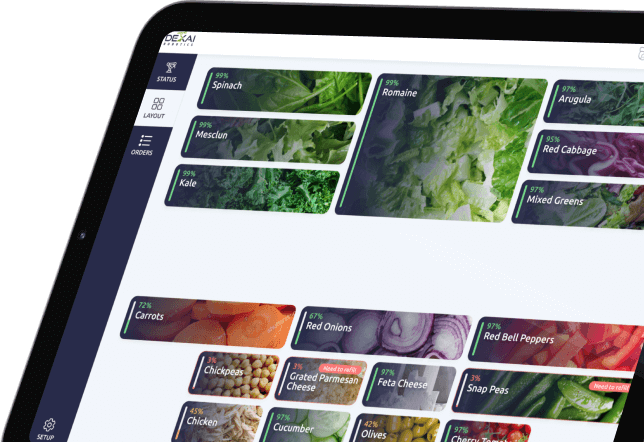


The system has produced a significant competitive advantage in the industry thanks to SumatoSoft’s well-thought opinions. They shouldered the burden of constantly updating a project management tool with a high level of detail and were committed to producing the best possible solution.

I was impressed by SumatoSoft’s prices, especially for the project I wanted to do and in comparison to the quotes I received from a lot of other companies.
Also, their communication skills were great; it never felt like a long-distance project. It felt like SumatoSoft was working next door because their project manager was always keeping me updated.

We tried another company that one of our partners had used but they didn’t work out. I feel that SumatoSoft does a better investigation of what we’re asking for. They tell us how they plan to do a task and ask if that works for us. We chose them because their method worked with us.

SumatoSoft is the firm to work with if you want to keep up to high standards. The professional workflows they stick to result in exceptional quality.
Important, they help you think with the business logic of your application and they don’t blindly follow what you are saying. Which is super important. Overall, great skills, good communication, and happy with the results so far.

Together with the team, we have turned the MVP version of the service into a modern full-featured platform for online marketers. We are very satisfied with the work the SumatoSoft team has performed, and we would like to highlight the high level of technical expertise, coherence and efficiency of communication and flexibility in work.
We can confidently say that SumatoSoft has put all our ideas into practice.

Rivalfox had the pleasure to work with SumatoSoft in building out core portions of our product, and the results really couldn’t have been better.
SumatoSoft provided us with engineering expertise, enthusiasm and great people that were focused on creating quality features quickly.

SumatoSoft succeeded in building a more manageable solution that is much easier to maintain. Their project management reflects the excellence of a larger company. Their team delivers high-quality results, attentive service, and reasonable pricing.

Thanks to SumatoSoft’s can-do attitude, amazing work ethic, and willingness to tackle clients’ problems as their own, they’ve become an integral part of our team. We’ve been truly impressed with their professionalism and performance and continue to work with the team on developing new applications.
We are completely satisfied with the results of our cooperation and will be happy to recommend SumatoSoft as a reliable and competent partner for development of web-based solutions

Quick playbook: selecting a web development partner [pdf]
Get a free playbook that will help you find the right web development partner. No email required.
Comprehensive multi-layer web security measures

Client security
- signing NDA and SLA from the start;
- clear policies that secure your intellectual property;
- secure authentication and access control for internal systems.

Data security
- adherence to GDPR, HIPAA, SOC 2, ISO 27001, and industry-specific regulations;
- AES-256 encryption for data at rest and TLS 1.2+ for data in transit to prevent breaches;
- zero trust security model with continuous verification of users, devices, and networks;
- automatic data backups and disaster recovery measures.

Application security
- automated continuous scanning for vulnerabilities and compliance gaps;
- real-time DDoS & bot protection;
- compliance with OWASP’s Top 10 security guidelines;
- regular security patches and updates.

Network security
- firewalls & intrusion detection systems (IDS) to detect and block malicious traffic;
- network segmentation that allows the isolation of critical services in case of a breach;
- encrypted tunnels for secure remote access to web applications;
- OAuth 2.0, JWT tokens, and API gateways to prevent unauthorized API access and data leaks.

DevSecOps
- automated security checks in CI/CD pipelines;
- implementation of best security practices and regular code reviews;
- safeguarding containerized apps against misconfigurations;
- logging & real-time security monitoring.
Core tech stack we use























Web development engagement models
Depending on your business needs, project scope, and team structure, we offer three flexible cooperation models for our custom web application development services.
Outsourcing
This is a classic approach in which we take complete responsibility for the entire development process. Our project management team organizes the work for our designers, developers, QA specialists, and other team members. You act as a stakeholder who focuses on strategic goals, communicating with our business analysts on project and business requirements and with our project managers on the project status.
Outstaffing
We strengthen your in-house team with our highly skilled developers, designers, business analysts, scrum masters, and QA specialists. Our experts work alongside your team shoulder to shoulder without the overhead of hiring full-time employees.
Dedicated team
A team of developers, designers, and QA specialists working exclusively on your project under your supervision. You retain complete control over the team management and oversight while our experts take care of the project execution.
Industry-specific web development
We specialize in developing multi-integrated, easily customizable, and fully controllable custom web software. Where the use case supports it, we add AI for search, classification, and forecasting.

E-learning
We build e-learning portals, LMS platforms, knowledge systems, and content management tools. AI can support learner assistance, document search, content tagging, and Q&A over internal materials.

E-commerce & Retail
We develop commerce platforms, catalog systems, inventory tools, and order management applications. AI can support product discovery, pricing analysis, support workflows, and demand forecasting.

Transport & Logistics
We build web applications for freight booking, warehouse operations, fleet management, and delivery control. AI can help with route planning, exception handling, document processing, and demand prediction.

Marketing Automation
We develop marketing platforms for campaign management, audience segmentation, reporting, and analytics. AI can support content classification, lead routing, performance analysis, and customer insights.

Healthcare & Lifestyle
We build secure web applications for patient services, records management, medical inventory, and internal workflows. Where policy allows, AI can support document intake, search, triage, and staff knowledge access.

Fintech
We build secure web applications for payments, compliance, risk control, and operational workflows. AI can support investigations, document review, transaction analysis, and internal knowledge retrieval.
Our web development approach
We run custom web application development through a structured process that covers scope, team setup, cost control, and post-launch support. When AI is part of the product, we extend SDLC with ADLC, so use case design, data preparation, evaluation, and rollout are handled inside the same process.
Project scoping
We define product goals, business requirements, AI scope, and delivery boundaries before development starts.
Project resource allocation
We assign the team structure based on product scope, architecture choices, AI workload, and delivery pace.
Project cost estimation
We estimate costs against scope, team mix, infrastructure choices, and AI usage patterns.
Risk management
We track delivery, security, integration, and AI-specific risks from the first phase to release.
Knowledge management & sharing
We document the system so your team can support, extend, audit, and govern it after release.
Code review
We review code for maintainability, security, performance, and fit with the agreed architecture.
Reporting
We keep reporting structured so the team can track progress, risks, spend, and release status.
Post-launch warranty
We support the product after release and fix issues tied to the agreed scope.
Predictable operating costs
AI features can distort a web product’s cost profile if each request triggers a heavy model call. We design for control from the start:
Awards & Recognitions








Frequently asked questions
What makes your custom web application development services different when AI is in scope?
Most teams can build a web interface and connect it to an API. The harder part is designing the backend, data flow, permissions, monitoring, and rollout model so AI features strengthen the product. We handle the web platform and the AI layer together.
Can you build a custom web app that is ready for AI, even if we are not adding AI on day one?
Yes. Many Clients want to modernize the product first, then add AI after the core workflows, data model, and access controls are in better shape. We can prepare the architecture so that later AI integration does not require a full rebuild.
How do you prevent AI features from exposing sensitive data?
We define access at the application and data access levels. That includes role-based permissions, protected service boundaries, auditability, and controlled retrieval rules. In regulated environments, we also design data handling flows that restrict what leaves protected systems.
How do you keep AI features from slowing down the interface?
We use asynchronous patterns where needed, so the main interface stays responsive while heavier tasks run in the background or stream results progressively. The right approach depends on the use case, latency target, and deployment model.
Can you build a custom web app that uses open-source models or private model hosting?
Yes. We can design web applications that connect to public model APIs, private cloud deployments, or self-hosted model infrastructure, depending on the security model, data sensitivity, and performance requirements.
Let’s start
If you have any questions, email us info@sumatosoft.com





