Enterprise software development
SumatoSoft builds and updates enterprise systems for companies that need stable operation, deep integration, and room to grow. We work with your core platforms, existing solutions, and internal tools. We bring in AI models only when they fit the process and meet your security requirements.







Comprehensive enterprise software services
We provide enterprise software services that run from consulting and modernization to building complex systems. Where it’s needed, we also prepare the architecture, data, integration layers, and access models for AI to work inside your existing operations.

IT consulting
We help enterprises align technology decisions with business goals and operating constraints over the long term. Our consulting covers architecture, technology selection, integration planning, modernization priorities, and reviewing AI use cases against security requirements, cost, system impact, and support effort.

Custom enterprise software development
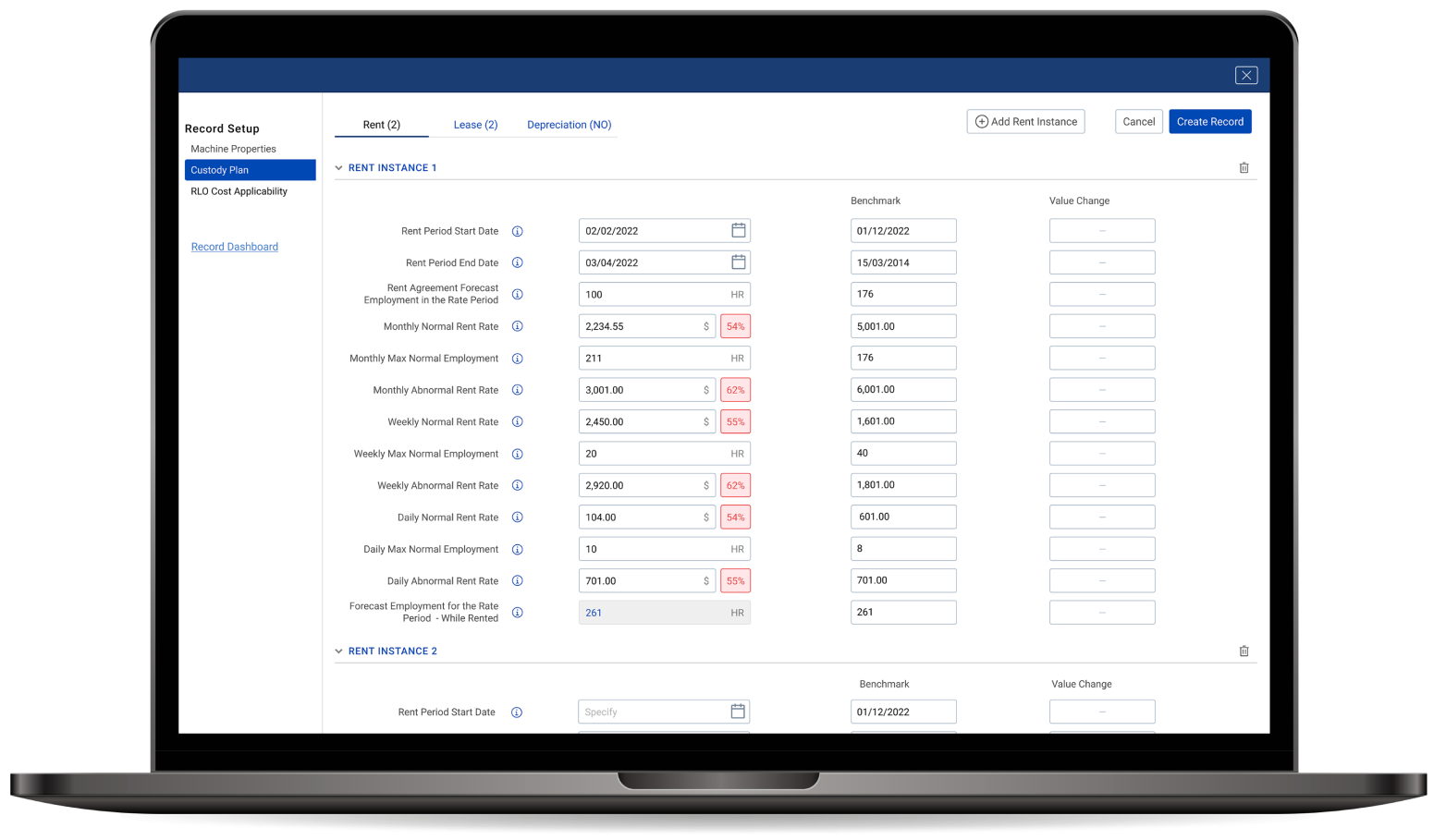
We design and build enterprise software for core business processes, internal operations, complex workflows, and cross-system coordination. Our systems fit into your existing environments and support long-term maintenance. When AI is in scope, we build it into the same architecture and hold it to the same security, permissions, auditability, and change-control rules.

Enterprise knowledge graph
We connect your enterprise platforms, applications, and data sources into a shared information layer. That includes the pipelines, data preparation, and semantic indexing needed for enterprise search, knowledge retrieval, and AI systems that work across your ERP, CRM, document storage, and other internal tools.

Legacy system modernization
We modernize legacy software by updating the architecture, cutting dependencies on outdated components, improving maintainability, and removing brittle integrations. That work includes refactoring monoliths, defining service boundaries, exposing stable APIs, and rebuilding data flows to support new digital functions and AI use cases.

Cloud solutions
We design, migrate, and optimize enterprise cloud environments across private, public, and hybrid infrastructure. Our work covers hosting strategy, system performance, cost control, resilience, and deploying data-intensive or model-based services when the architecture calls for them.

Data management and BI
We help enterprises govern their data and use it more effectively through data management and business intelligence (BI) solutions. That includes reporting, analytics, data-quality work, and preparing the data foundations for search, recommendation, forecasting, and decision-support systems.
AI starts with data readiness
You can’t point a large language model (LLM) at scattered SQL tables, shared drives, scanned PDFs, and inconsistent records and expect dependable output. Before we add copilots or agents, we run a data readiness audit. We inventory the sources, remove duplicates, define metadata, map permissions, pull content out of documents, and prepare the retrieval layer, so the AI has a controlled foundation to work from.
- Data source inventory across systems, folders, databases, and documents
- Permission mapping so retrieval respects the same access model as your staff
- Deduplication, normalization, chunking, and metadata design
- Pilot dataset preparation with baseline retrieval and answer evaluation


Your next competitive advantage starts now
Start your custom AI enterprise software journey.
Autonomous enterprise
Companies need systems that take manual work out of long processes and put current data in front of people at the moment they decide. We design those systems through process automation, integration, and models, with measurable gains in speed, consistency, and response quality.
Workflow automation and orchestration
We build systems that route tasks between departments, trigger actions across connected platforms, and handle exceptions according to predefined rules. Processes stay manageable without constant manual intervention, and handoffs between teams don’t interrupt approvals.
Predictive operations
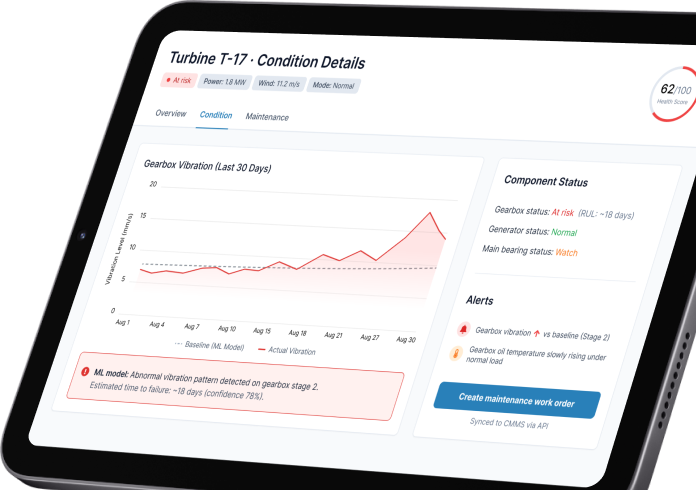
We apply machine learning to forecast demand, flag failure risk, surface anomalies, and help teams step in earlier in operational workflows.
Enterprise copilots and decision support
We create internal AI tools that retrieve approved information, summarize case context, recommend next steps, and help employees inside their existing systems.
Connected operations and IoT
For businesses with equipment, devices, or field assets, we connect operational data to monitoring, alerts, maintenance logic, and service workflows.
Digital twins and simulation
Where the use case calls for it, we model assets or operating environments in software, so you can test changes, compare scenarios, and plan without disrupting live operations.
Data platforms and operational analytics
We structure data pipelines and analytics layers that support reporting, forecasting, search, and model-backed automation across the enterprise.
Cyber-physical systems
We connect computational algorithms with physical components, building systems where machines and people work together to improve production and service delivery.
Recent works



The system has produced a significant competitive advantage in the industry thanks to SumatoSoft’s well-thought opinions. They shouldered the burden of constantly updating a project management tool with a high level of detail and were committed to producing the best possible solution.

Nectarin LLC aimed to develop a complex Ruby on Rails-based platform, which would be closely integrated with such systems as Google AdWords, Yandex Direct and Google Analytics.

I was impressed by SumatoSoft’s prices, especially for the project I wanted to do and in comparison to the quotes I received from a lot of other companies.
Also, their communication skills were great; it never felt like a long-distance project. It felt like SumatoSoft was working next door because their project manager was always keeping me updated.

We tried another company that one of our partners had used but they didn’t work out. I feel that SumatoSoft does a better investigation of what we’re asking for. They tell us how they plan to do a task and ask if that works for us. We chose them because their method worked with us.

SumatoSoft is the firm to work with if you want to keep up to high standards. The professional workflows they stick to result in exceptional quality.
Important, they help you think with the business logic of your application and they don’t blindly follow what you are saying. Which is super important. Overall, great skills, good communication, and happy with the results so far.

Together with the team, we have turned the MVP version of the service into a modern full-featured platform for online marketers. We are very satisfied with the work the SumatoSoft team has performed, and we would like to highlight the high level of technical expertise, coherence and efficiency of communication and flexibility in work.
We can confidently say that SumatoSoft has put all our ideas into practice.

We are absolutely convinced that cooperation between companies is only successful when based on effective teamwork (and Captain Obvious is on our side!). But the teams may vary on the degree of their cohesion. With SumatoSoft LLC, we feel like a bobsled team — together in the same cockpit, aimed at the same targets.

They are very sharp and have a high-quality team. I expect quality from people, and they have the kind of team I can work with. They were upfront about everything that needed to be done.
I appreciated that the cost of the project turned out to be smaller than what we expected because they made some very good suggestions. They are very pleasant to work with.

Rivalfox had the pleasure to work with SumatoSoft in building out core portions of our product, and the results really couldn’t have been better.
SumatoSoft provided us with engineering expertise, enthusiasm and great people that were focused on creating quality features quickly.

We’d like to thank SumatoSoft for the exceptional technical services provided for our business. It should be noted that we started our project’s development with another team, but the communication and the development process in general were not transparent and on schedule. It resulted in a low-quality final product.

SumatoSoft succeeded in building a more manageable solution that is much easier to maintain. Their project management reflects the excellence of a larger company. Their team delivers high-quality results, attentive service, and reasonable pricing.

When looking for a strategic IT-partner for the development of a corporate ERP solution, we chose SumatoSoft. The company proved itself a reliable provider of IT services.

Thanks to SumatoSoft’s can-do attitude, amazing work ethic, and willingness to tackle clients’ problems as their own, they’ve become an integral part of our team. We’ve been truly impressed with their professionalism and performance and continue to work with the team on developing new applications.
We are completely satisfied with the results of our cooperation and will be happy to recommend SumatoSoft as a reliable and competent partner for development of web-based solutions

Enterprise solution built for your industry

Healthcare
We build enterprise systems for telemedicine, patient management, remote monitoring, and clinical data exchange. These solutions connect care processes, meet data-security requirements, and give teams consistent information.

FinTech
We build financial systems for payments, digital wallets, trading operations, and risk management. They include secure transaction frameworks and internal tools, and we add anomaly-detection and monitoring models when they’re needed.

Logistics and transportation
We build systems for fleet management, route planning, supply-chain monitoring, and warehouse coordination. They help reduce delays, balance workloads, and keep related services in sync.

Manufacturing
We build solutions for production management, equipment monitoring, maintenance planning, and performance analysis. We bring in the Internet of Things (IoT) and predictive models to track downtime, line load, and asset health.

Travel and hospitality
We design systems for reservations, facility management, and guest services. They support high-volume operations, connect customer data, and tie processes together across multiple locations.

Telecommunications
We build solutions for customer self-service, billing, service management, and network operations. We use models for request routing, incident handling, and recommendations, which reduces the load on teams.
Enterprise software built on standards
We build enterprise software around security, compliance, accessibility, and audit requirements from the start. Where AI is part of the scope, we apply the same discipline to model access, retrieval, logging, and human review. Our delivery is backed by ISO 9001:2015 and ISO/IEC 27001:2022-certified operations, and we support projects aligned with the standards and frameworks listed below.
- GDPR
- ISO 9001:2015
- ISO/IEC 27001:2022
- HIPAA
- PCI DSS
- SOC 2
- WCAG
- OWASP

Quick playbook: selecting an enterprise development partner [pdf]
Get a free playbook that will help you find the right enterprise software development partner. No email required.
Enterprise software development approach
At SumatoSoft, we follow a development process proven on highly complex projects. It helps us manage scope, budget, quality, and risk at every stage. When a system includes AI components, we add Agentic Development Lifecycle (ADLC) controls on top: data-access management, model validation, release planning, and post-launch monitoring.
Project definition
We begin by defining the goals, requirements, boundaries, and expected results. We run stakeholder interviews and workshops to clarify business objectives and technical constraints. At this stage, we set success metrics and a roadmap with key milestones.
Team formation
Team composition depends on the architecture, project stage, subject area, and integrations. We pick specialists for specific tasks and define who owns what. That cuts communication overhead and helps avoid bottlenecks.
Cost estimation
We base the estimate on the scope of work, dependencies, and deadlines. We break tasks down across development, design, testing, and analytics. That keeps the budget aligned with the actual scope and the outcome you agreed to.
Risk management
We identify risks early and reassess them as the project moves. We track technical, operational, business, and security issues. For AI functions, we also weigh data quality, access restrictions, model-result validation, and failure scenarios.
Documentation and knowledge transfer
We keep working documentation current throughout the project. That matters for onboarding, collaboration, and knowledge transfer. We use centralized repositories so the whole team can reach the information. For AI projects, we document data sources, access rules, validation logic, and system limitations.
Code review
We review code regularly. That keeps the system readable, stable, and secure. We use static analysis and internal development standards, and senior engineers run the reviews. On the AI side, we check model integration, query processing, data-access boundaries, and how the system behaves during failures.
Reporting
Project progress stays transparent. The manager reports regularly on progress, deviations, and risks. We show the work in a demo at the start of each sprint to gather feedback and adjust the plan.
Post-launch warranty
After release, we stay on the project for the warranty period. We fix defects, update security components, and monitor performance. If you need it, we move the project into long-term support.
Our expertise in tools and technologies
At SumatoSoft, we choose the tools, technologies, and platforms that fit each enterprise project. Our experience spans programming languages, frameworks, databases, and cloud services, so we can weigh several architecture options and pick the best one rather than forcing every business onto a single stack.


















AI-first security posture
Enterprise systems usually have perimeter security already. The harder problem starts when AI touches internal data, retrieval pipelines, tool access, and business actions. We design AI-enabled systems with controls for prompt injection, data and model poisoning, sensitive-information disclosure, excessive agency, and unbounded consumption, on top of the baseline requirements for encryption, access control, logging, and recovery.

Identity and access control
We tie AI access to the same identity and permission model the rest of the enterprise system uses. The platform checks user rights before retrieval, limits what the model can reach, restricts which tools it can call, and holds tenant boundaries.

Prompt and tool security
We put policy enforcement between user input, retrieval, and every downstream action. This layer filters unsafe instructions, blocks prompt-injection patterns, constrains tool execution, validates outputs before they reach other systems, and sends higher-risk actions to human review.

Data integrity and retrieval security
We protect the data layer that feeds AI features. That includes source validation, document-provenance checks, indexing controls, poisoning detection, and isolation between retrieval services and core records, so untrusted content can’t shape model behavior unchecked.

Model runtime and network boundaries
We keep model services, vector stores, and core systems in controlled network segments, with private connectivity where it’s required. Write actions don’t pass straight from the model to the database. They move through governed APIs, business rules, approval logic, and audit logs.

Secure delivery and observability
We build security controls into the delivery pipelines and runtime monitoring. We log prompts, retrieved sources, model responses, tool calls, and permission decisions, so teams can investigate failures, review system behavior, and meet audit requirements.

Security baseline
Alongside the AI-specific controls, we still apply the standard protections enterprise software requires: encryption in transit and at rest, secret management, secure continuous integration and delivery (CI/CD), backup policies, and operational monitoring.
Benefits custom enterprise software
Through custom enterprise application development, we help clients simplify business processes across manufacturing, procurement, services, sales, finance, and HR by building enterprise resource planning (ERP) systems that are customizable, scalable, and secure.

Forecasting and decision making
We give management timely data for planning and decisions. Where it helps, we strengthen these systems with AI and machine learning for forecasting, anomaly detection, and pattern analysis.

Business processes automation
We automate business operations, including payment flows, manufacturing processes, and internal workflows. For businesses that use connected devices, we also apply IoT to track events and automate steps across the operation.

Data centralization & integration
We connect departments, teams, and business systems so data moves more consistently across the organization. That improves coordination, visibility, and process efficiency.

Improved data safety & security
We help protect enterprise data through centralized access control, consistent security policies, and controlled user permissions across the system.

Collaboration management
We build tools that support coordination across teams and business units, including project-management systems, video-conferencing tools, messaging platforms, and other internal collaboration software.

ERP systems optimization
We help clients simplify business processes across manufacturing, procurement, services, sales, finance, and HR by building ERP systems that are customizable, scalable, secure, and aligned with how the business actually operates.
What makes SumatoSoft a reliable partner
- We have delivered software in 25+ countries and across multiple business domains.
- We focus on long-term cooperation with average client engagement running 3+ years.
- We work transparently and keep delivery visible.
- When AI is part of the system, we add ADLC controls to the delivery process: standard enterprise software follows established engineering and QA practices.
For the AI scope, we extend that process with ADLC so that architecture, evaluation, cost control, access governance, and production behavior are handled in a structured way.

Awards & Recognitions




Let’s start
If you have any questions, email us info@sumatosoft.com

Frequently asked questions
How do you integrate Generative AI into an on-premise legacy system without using public cloud APIs?
We can deploy the AI layer inside private infrastructure rather than routing requests through public endpoints. In regulated environments, that may mean self-hosted open-source models, isolated networking, private gateways, and enterprise middleware that keeps the data path inside your environment.
How do you protect tenant data when AI features are added to a large enterprise platform?
Access control has to be enforced before retrieval happens. We map the user’s identity and permissions to the retrieval layer, so the model only receives content the user is already allowed to view. In multi-tenant systems, that also means tenant isolation in storage, indexing, and logging.
Our monolith already struggles under load. Will an LLM make it worse?
It will if you push the AI workload through the monolith itself. We usually separate the AI-heavy workflow into its own service and let it run asynchronously, so the core application doesn’t have to carry model latency, retrieval calls, or long-running agent logic.
How do you test an enterprise system when AI outputs are not identical every time?
We don’t rely on pass-fail checks alone. We combine standard quality assurance (QA) with retrieval tests, guarded evaluation datasets, and model-specific metrics to track whether the system stays grounded, permission-safe, and useful after every release.
Should we fine-tune a model on our enterprise data or use RAG?
In most enterprise cases, we start with retrieval-augmented generation (RAG). It’s easier to update, easier to govern, and better suited to data that changes often. We consider fine-tuning when the task depends on proprietary reasoning patterns, strict output formats, or domain-specific behavior that retrieval alone can’t provide.




