AI, IoT and custom software development services
We design, build, and modernize custom software that gives growing companies better control over operations, products, and data. We offer AI agents, RAG systems, IoT platforms, and enterprise applications for companies that need custom software development services aligned with real business operations.







Business challenges we solve
As companies grow, software starts to define how fast teams can move, how clearly leaders see the business, and how much control the company has over its operations. Our custom software development services help replace operational friction with systems built around your workflows, data, and growth plans.

Manual workflows slow execution
We develop software that turns repeated manual work into structured digital workflows. Approvals, task handoffs, reporting, document processing, and internal operations become easier to track, manage, and improve across teams.

Legacy systems limit growth
We modernize legacy software so companies can extend core systems, improve performance, connect new tools, and support new business processes without replacing everything at once.

Disconnected systems reduce visibility
We build integrations that connect CRM, ERP, analytics, IoT, financial, and operational platforms into a unified software environment. Leadership gets cleaner data, clearer reporting, and stronger control over business performance.

Generic tools force process compromises
We develop custom applications that match how your company actually works. You get systems designed around your workflows, users, and long-term product roadmap.
Our services
Our software development services combine senior engineering, business analysis, architecture design, and long-term delivery ownership. The focus is practical: build software that supports how the company operates, connects with the systems already in use, and remains maintainable as the business grows.


Get a free quote for your project development from our expert team!
AI and agentic development services
Our AI and agentic development services help companies turn internal knowledge, workflows, and operational data into production-ready AI systems. The work covers the full path from readiness assessment and proof-of-concept to AI agents, RAG systems, LLM integrations from an experienced LLM development company, and GenAI applications connected to real business processes.
AI Readiness Assessment
This assessment evaluates your data, infrastructure, workflows, and business use cases to define where AI can create practical value. The result is a clear implementation roadmap, technical priorities, and the next steps required to move toward production.
AI PoC Development
AI PoC development validates a selected use case before full-scale implementation. Your team can test feasibility, business value, data quality, integration needs, and user adoption potential within a controlled scope.
AI Agent Development
Our AI agent development services create systems that work with tools, business applications, internal data, and multi-step workflows. These agents support research, operations, customer service, reporting, knowledge retrieval, task automation, and decision support.
RAG Development Services
Our RAG development services connect LLMs with company knowledge, turning internal content into a usable source for search, summarization, and contextual answers. Typical sources include documents, policies, product data, customer information, and operational records.
LLM Development
As an LLM development company, SumatoSoft covers model selection, prompt architecture, private deployment options, evaluation workflows, and integration with existing software environments. The result is a practical LLM layer aligned with business use cases and technical constraints.
GenAI Development Services
Our GenAI development services support text, image, structured content, document processing, analytics, and workflow automation. Each application is designed around business use cases, user roles, data access rules, and practical adoption inside the company.
IoT and AIoT development services
As an IoT development company, we develop IoT and AIoT systems that connect devices, equipment, facilities, field operations, and enterprise software into one controlled digital environment. Our team builds device firmware, edge applications, data ingestion, cloud infrastructure, dashboards, analytics modules, AI models, and integrations with business systems.
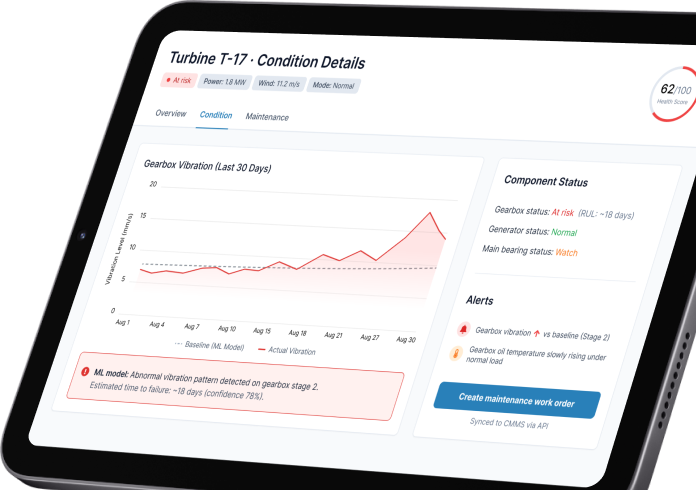
With AIoT, connected systems move from monitoring to intelligence. We add machine learning models for anomaly detection, predictive maintenance, operational forecasting, and decision support, so companies can understand equipment behavior, improve planning, and manage connected operations with greater confidence.
Enterprise IoT development
As a dedicated IoT development company, we build enterprise IoT systems for connected products, industrial assets, facilities, vehicles, equipment, and distributed operations. The architecture can include device onboarding, secure communication, telemetry processing, cloud infrastructure, dashboards, admin tools, access control, and integrations with ERP, CRM, maintenance, logistics, or analytics platforms.
The result is a scalable IoT foundation for operational visibility, connected services, customer portals, automation, and long-term product evolution. Leadership receives a clearer view of asset performance, while teams work with consistent data across the systems they already use.
AIoT development
Our AIoT development work covers systems that combine IoT data with machine learning, analytics, and automation. These solutions turn telemetry and operational data into anomaly detection, behavior modeling, predictive maintenance, forecasting, automated alerts, and decision-support dashboards.
For the business, AIoT creates a more advanced management layer over connected operations. Teams receive clearer signals from equipment and processes, while leadership gains better visibility into performance, service needs, and operational priorities.
Predictive maintenance software development
Our predictive maintenance software development covers systems that analyze equipment data and support maintenance planning based on actual asset behavior. These systems can collect data from sensors, machines, IoT platforms, maintenance logs, and operational software, then organize it into models, dashboards, alerts, and workflow integrations.
The business value is stronger asset visibility, more data-driven service planning, and better control over equipment reliability. Maintenance teams can prioritize work with clearer context, while leadership can track uptime, utilization, and service efficiency across critical assets.
IoT for manufacturing
We develop IoT systems for manufacturing environments where production visibility, equipment performance, quality control, and facility operations need to be connected in one digital layer. These systems can collect data from machines, sensors, production lines, warehouses, and enterprise platforms.
A manufacturing IoT solution can include machine monitoring, production dashboards, downtime tracking, quality-control data, energy monitoring, maintenance alerts, and integrations with ERP, MES, WMS, or analytics tools. Executives receive a clearer view of throughput, constraints, asset performance, and production efficiency.
IoT security and compliance
We design IoT systems with secure communication, controlled access, encrypted data transfer, infrastructure protection, and governance across devices, users, and cloud services. The architecture can include device authentication, role-based access control, secure APIs, encrypted telemetry, protected cloud storage, audit logs, monitoring, and update mechanisms.
For enterprise and regulated environments, this creates a governed foundation for connected operations. Companies can expand device networks, add users, integrate new systems, and introduce AI capabilities within a controlled technical architecture.
We strive to become a technological partner to our Clients, which means a lot to us. It’s about saying no to unfeasible ideas, offering proactive and practical advice, maintaining open and honest communication, and avoiding unrealistic expectations. We help minimize unnecessary costs and stay in touch like a trusted personal assistant, ensuring every decision delivers genuine value.

Which dev path fits your business?
Every company reaches a different point in its software journey. Some need a new platform built from scratch. Others need to modernize a system that already supports core operations. Some need to connect existing tools into one coordinated environment.
The right path defines the architecture, scope, budget, and delivery roadmap before development starts. This gives the project a clear technical direction and keeps every decision connected to business goals from day one.
 Build from scratch
 Modernize an existing system
 Integrate your software ecosystem
Build from scratch
For companies launching a new product, internal platform, customer portal, SaaS solution, or operational system.
Custom software development from scratch gives your business a system shaped around its workflows, users, data, and growth plans. The result is a product built around your business logic from the start, with clean architecture, full code ownership, and room for future evolution.
Best fit when you need to:
- Launch a new digital product
- Replace manual workflows with a dedicated system
- Build a customer-facing platform
- Create software around a unique business model
- Move from idea to MVP or full-scale product
Modernize an existing system
For companies with software that still supports the business and needs a stronger technical foundation.
Legacy software modernization extends the value of the existing system through refactoring, re-platforming, cloud migration, UX improvement, architecture redesign, and phased feature replacement. The system becomes easier to maintain, scale, and improve while continuing to support daily operations.
Best fit when you need to:
- Improve an aging internal platform
- Update outdated architecture
- Move software to the cloud
- Improve performance and usability
- Prepare the system for new integrations, AI, or IoT capabilities
Integrate your software ecosystem
For companies that already use several systems and need them to work as one connected environment.
Software integration creates reliable data flows and coordinated workflows across ERP, CRM, IoT, analytics, billing, logistics, finance, and operational platforms. Leadership gets better visibility, while teams work with consistent, connected information across the business.
Best fit when you need to:
- Connect business-critical systems
- Unify data across departments
- Automate cross-system workflows
- Improve reporting accuracy
- Create a foundation for AI, analytics, or operational dashboards


Transform your business with custom software. Start Now!
Industries we support
Every industry has its own workflows, regulations, data structures, and operating pace. Our software development services adapt to that context, so the final product fits the way your business sells, serves customers, manages operations, and scales.
Manufacturing
Industrial environments demand reliability. We build custom software, IoT and predictive-maintenance platforms with AI that reads sensor data, flags anomalies, and lets your engineers query operational data securely.
Healthcare
We develop healthcare software designed to operate within HIPAA-regulated environments, support clinical and administrative workflows, and connect patient data across secure systems. Our experience includes patient management platforms, telemedicine solutions, healthcare analytics, AI-assisted diagnostics, and IoT-powered medical applications.
Logistics
Our logistics software solutions support route planning, fleet visibility, warehouse coordination, shipment tracking, and operational analytics. SumatoSoft builds platforms that connect logistics data, automate routine workflows, and give teams a clearer view of transportation, delivery, inventory, and supply chain performance.
Fintech
We build secure financial software for payments, reporting, wealth management, insurance, compliance workflows, and financial planning. Our fintech development services focus on reliability, data protection, scalable architecture, and smooth integration with internal systems, external providers, and regulatory processes.
Edtech
We develop EdTech platforms for online learning, course management, student information, corporate training, and digital education products. Our solutions support intuitive learning flows, content delivery, progress tracking, analytics, and integration with the systems that educational organizations already use.
Adtech
Our AdTech software development services cover media buying platforms, campaign management systems, analytics dashboards, reporting tools, and automation software for advertising teams. These solutions help companies manage data-heavy workflows, improve campaign visibility, and coordinate advertising operations from one environment.
How we deliver
We deliver software through a structured engineering process that combines senior technical ownership, clear delivery stages, and controlled use of AI-assisted development. The Agentic Software Development Lifecycle gives every project a defined path from business goals and architecture to implementation, validation, release, and long-term product evolution.
Every engagement starts with a clear understanding of the business goal, target users, operational context, and technical constraints. We define what the system should achieve, how it should support the business, and which architectural decisions will shape delivery.
At this stage, we clarify requirements, review existing systems, identify integration points, and prepare the initial delivery direction. This gives the project a practical foundation before development begins.
The solution architecture defines how the product will work, scale, integrate, and evolve. We plan the core system components, data flows, user roles, security requirements, and infrastructure approach.
You receive a delivery roadmap that connects product scope, engineering priorities, team composition, budget assumptions, and release planning. Every major decision has a clear business and technical reason behind it.
AI assistants support selected engineering tasks, documentation, code analysis, test preparation, and development acceleration. Senior engineers remain responsible for architecture, implementation quality, code review, security decisions, and final delivery standards.
This gives the team a structured way to use AI while keeping technical ownership clear at every stage of the project.
Development moves through planned iterations with regular reviews, demos, testing, and delivery checkpoints. Each release candidate is validated against functional requirements, acceptance criteria, integration behavior, performance expectations, and user experience.
For AI-powered systems, validation also covers output quality, retrieval behavior, model responses, data boundaries, and workflow reliability where relevant.
After launch, we support the product through monitoring, maintenance, improvements, and roadmap-based development. The system continues to evolve with business needs, user feedback, new integrations, and future product goals.
This keeps the software aligned with the company’s operations after the first release and gives leadership a stable engineering partner for long-term growth.
Core tech stack we work with













Quality control practices
We have established and implemented internal guidelines that set the standards for the quality of our work that guide us in all our software engineering services.

Accurate and realistic cost estimation
We conduct thorough business requirements and user needs analysis to provide precise budget and timeline assessments. The popular fixed-budget cooperation model implies that we commit to the budget we propose.

Competence-based selection of a project team
We assign only those specialists to each role who best fit the project needs in terms of their skills, interests, and expertise.

Comprehensive risk management
As an essential part of every project, we identify risks and develop a comprehensive mitigation plan. Our project manager continuously monitors risks to ensure they are addressed proactively and effectively.

Budget control
Our project manager monitors the budget execution on every iteration, ensuring the development goes according to a plan and avoiding unexpected budget overruns.

Responsible approach to deadlines
With structured processes and effective change management, we consistently meet deadlines without compromising quality or project outcomes.

Regular reporting
Regular weekly calls, biweekly demos, time and project progress reports, identified and fixed bugs tables – we keep the Client informed at every stage.
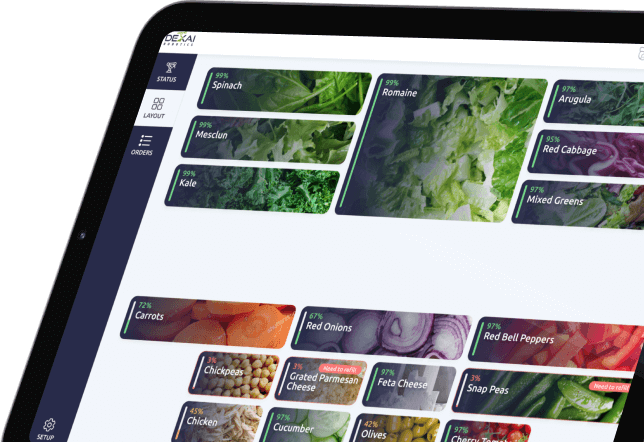
Our recent works




From the early stages of the project, SumatoSoft demonstrated a proactive attitude, actively seeking opportunities to enhance the solution and anticipate our needs. They consistently took the initiative to address any potential issues, provide timely updates, and offer solutions to challenges that arose during development. This proactiveness greatly contributed to the project’s success and exceeded our expectations.

The system has produced a significant competitive advantage in the industry thanks to SumatoSoft’s well-thought opinions. They shouldered the burden of constantly updating a project management tool with a high level of detail and were committed to producing the best possible solution.

Nectarin LLC aimed to develop a complex Ruby on Rails-based platform, which would be closely integrated with such systems as Google AdWords, Yandex Direct and Google Analytics.

I was impressed by SumatoSoft’s prices, especially for the project I wanted to do and in comparison to the quotes I received from a lot of other companies.
Also, their communication skills were great; it never felt like a long-distance project. It felt like SumatoSoft was working next door because their project manager was always keeping me updated.

We tried another company that one of our partners had used but they didn’t work out. I feel that SumatoSoft does a better investigation of what we’re asking for. They tell us how they plan to do a task and ask if that works for us. We chose them because their method worked with us.

SumatoSoft is the firm to work with if you want to keep up to high standards. The professional workflows they stick to result in exceptional quality.
Important, they help you think with the business logic of your application and they don’t blindly follow what you are saying. Which is super important. Overall, great skills, good communication, and happy with the results so far.

Together with the team, we have turned the MVP version of the service into a modern full-featured platform for online marketers. We are very satisfied with the work the SumatoSoft team has performed, and we would like to highlight the high level of technical expertise, coherence and efficiency of communication and flexibility in work.
We can confidently say that SumatoSoft has put all our ideas into practice.

We are absolutely convinced that cooperation between companies is only successful when based on effective teamwork (and Captain Obvious is on our side!). But the teams may vary on the degree of their cohesion. With SumatoSoft LLC, we feel like a bobsled team — together in the same cockpit, aimed at the same targets.

They are very sharp and have a high-quality team. I expect quality from people, and they have the kind of team I can work with. They were upfront about everything that needed to be done.
I appreciated that the cost of the project turned out to be smaller than what we expected because they made some very good suggestions. They are very pleasant to work with.

Rivalfox had the pleasure to work with SumatoSoft in building out core portions of our product, and the results really couldn’t have been better.
SumatoSoft provided us with engineering expertise, enthusiasm and great people that were focused on creating quality features quickly.

We’d like to thank SumatoSoft for the exceptional technical services provided for our business. It should be noted that we started our project’s development with another team, but the communication and the development process in general were not transparent and on schedule. It resulted in a low-quality final product.

SumatoSoft succeeded in building a more manageable solution that is much easier to maintain. Their project management reflects the excellence of a larger company. Their team delivers high-quality results, attentive service, and reasonable pricing.

When looking for a strategic IT-partner for the development of a corporate ERP solution, we chose SumatoSoft. The company proved itself a reliable provider of IT services.

Thanks to SumatoSoft’s can-do attitude, amazing work ethic, and willingness to tackle clients’ problems as their own, they’ve become an integral part of our team. We’ve been truly impressed with their professionalism and performance and continue to work with the team on developing new applications.
We are completely satisfied with the results of our cooperation and will be happy to recommend SumatoSoft as a reliable and competent partner for development of web-based solutions

We’ve been working with SumatoSoft for a few years, starting from the initial monitoring system, so they already understood our environment quite well. At the same time, they still managed to surprise us with their professionalism.

We’d like to sincerely thank SumatoSoft for the work they’ve done on our maintenance system. At one point, our maintenance efforts became inefficient – long downtimes and rising repair costs became the norm.

We had already invested in AI, but the output was unclear. There were multiple initiatives across the company, each showing some promise, but no clear way to evaluate them or connect them to business outcomes.

SumatoSoft is flexible, efficient, and extremely good at planning and being proactive. They have also been very proactive in their approach throughout the project, seeking to understand the needs and the reasons behind them before launching into development, which has been helpful for maintaining direction and consistency, especially because the end client is regularly generating new ideas for added features.

Your perfect software solution is just one click away. Contact Us!
Entrust your software development to the team who know how to do it right.
Awards & recognitions
What affects software development cost
Every software project has its own scope, architecture, and delivery path. We estimate development cost based on the business goal, technical complexity, required integrations, and the level of support needed after release.
A clear estimate starts with a short discovery process. We review what you want to build, how the system should work, which users it must support, and what technical requirements will shape the delivery roadmap.

Product scope
The number of user roles, workflows, features, screens, and business scenarios defines the core project scope. A focused MVP requires a different delivery setup than a full-scale enterprise platform with multiple departments, permissions, and operational layers.

Architecture complexity
Custom software can be a standalone application, a SaaS platform, an internal business system, or a complex enterprise environment. Architecture affects development effort, scalability planning, performance requirements, and long-term maintenance.

Integrations
Most business software connects with existing systems such as CRM, ERP, payment providers, analytics tools, IoT platforms, data warehouses, or third-party APIs. The number and complexity of integrations influence both engineering effort and testing scope.

Data migration
Projects that involve legacy systems often require data cleanup, mapping, migration, and validation. This work helps the new system operate with accurate, structured, and usable business data from day one.

AI, IoT, and advanced functionality
AI agents, RAG systems, predictive analytics, IoT dashboards, device management, and real-time data processing require additional architecture, evaluation, and integration work. We define this scope early so the budget reflects the actual system design.

Security and compliance requirements
Healthcare, FinTech, enterprise, and data-intensive products often require stronger access control, audit trails, encryption, infrastructure policies, and compliance-ready documentation. These requirements are built into the delivery plan from the start.

Team composition
The required team depends on the project type. A typical setup may include a business analyst, solution architect, UI/UX designer, developers, QA engineers, DevOps specialist, project manager, and technical lead.

Timeline and delivery model
A fixed-budget project, dedicated team, staff augmentation model, or long-term product development partnership affects how the work is planned and billed. We recommend the model that fits your scope, internal capacity, and launch goals.

Post-launch support
Software continues to evolve after release. Support, monitoring, optimization, new feature development, infrastructure updates, and product roadmap execution can be planned as part of the initial engagement or added after launch.
Why Clients choose SumatoSoft
- Delivery transparency from day one
You get structured project visibility through Jira, Confluence, milestone reviews, demos, and regular reporting. Scope, progress, priorities, and delivery status stay clear throughout the engagement.
- ISO-certified quality and security processes
SumatoSoft works under ISO 27001 and ISO 9001 certifications. These standards support information security, quality management, documentation discipline, and consistent delivery practices.
- Advisory partnership, not task execution
Our team actively contributes engineering judgment, practical recommendations, and product thinking throughout the project. We help shape the solution around business value, technical feasibility, and long-term product evolution.
- Built for long-term cooperation
SumatoSoft’s delivery model is designed for companies that need a technology partner beyond the first release. Our Client relationships average 3+ years, and many Clients continue with additional projects after the initial engagement.

Let’s start
If you have any questions, email us info@sumatosoft.com


Frequently asked questions
What software development services does SumatoSoft offer?
SumatoSoft provides five core service lines: AI and agentic development, IoT and AIoT development, custom and enterprise software, legacy modernization, and MVP development. The company has worked across 12+ industries over 14 years, with headquarters in Boston and a development center in Warsaw. Published work includes enterprise software for Toyota and projects for Beiersdorf.
How does SumatoSoft build AI agents?
SumatoSoft builds AI agents as production software components with tool use, memory, multi-step reasoning, enterprise data access, and integration into existing applications. Engagements move through assessment, proof of concept, architecture, development, evaluation, and rollout. Every AI engagement runs under the Agentic Software Development Lifecycle. The final technology stack must be confirmed by the Engineering Lead before publication.
What is the Agentic Software Development Lifecycle?
The Agentic Software Development Lifecycle is SumatoSoft’s delivery framework for building software with AI assistants working under senior engineering oversight at defined review gates. ADLC structures how requirements, architecture, development, evaluation, security review, and release control are handled across AI-assisted delivery.
Is SumatoSoft ISO certified?
Yes. SumatoSoft is ISO 27001 and ISO 9001 certified, reflecting its quality and information security management practices. The page may also mention current accreditations such as AWS Partner status after confirmation of active display rights. Industry-specific compliance language should stay scoped: healthcare software is HIPAA-enabling, while PCI DSS or other regulatory references require Compliance Lead approval.
How much does software development cost with SumatoSoft?
Software development cost depends on scope, complexity, timeline, integrations, team composition, and support needs. SumatoSoft provides tailored estimates after reviewing requirements and business goals. Pricing also depends on the cooperation model: software development outsourcing, staff augmentation, or dedicated team.



