Super App development company
We build Super Apps that become central to your users’ daily lives. Whether you’re an enterprise uniting multiple services under one digital roof or a rapidly scaling business ready to expand beyond your core offering, we integrate multiple services into one seamless experience.






Why choose SumatoSoft for super App development
SumatoSoft has built custom software since 2012. We have delivered 350+ solutions for clients in 25+ countries, from single-product startups to enterprises running multiple service lines.

Proven expertise

Multi-layer security

Mature DevOps culture

Transparent collaboration

ISO 9001-certified quality process









Why make a super App?
All-in-one platforms that users come back to daily.
 For enterprises
 For scaling businesses
For enterprises
A super app lets an enterprise with several service lines:
- Unify services under one brand,
- Merge business functions such as retail, loyalty, delivery, and finance into one platform,
- Share infrastructure for authentication, analytics, billing, and compliance,
- Monetize across services through in-app upselling and personalized offers,
- Deepen loyalty with rewards and insights that follow the user between services,
- Lower acquisition cost by consolidating entry points and keeping users inside the ecosystem.

For scaling businesses
If you already have a user base and one app that solves one problem well, a super app lets you:
- Expand into adjacent services,
- Enter new markets with a multi-service offer,
- Increase retention by giving users more reasons to open the app,
- Lower acquisition cost through shared infrastructure and in-app cross-promotion,
- Diversify revenue with subscriptions, ads, transaction fees, and in-app purchases,
- Make your app a daily habit for your users.

What is a super app, and how is one built?
A super app is one app that hosts many services as mini-apps. Messaging, payments, commerce, ride-hailing, and financial services run inside a single shell, on a shared wallet and one identity. The user opens one app and moves between services.
The five-layer architecture is what separates a super app from a large app with microservices.
- Host shell. The native app your users install. We build it in React Native or Flutter when a shared codebase makes sense, or fully native when performance demands it. The shell is responsible for navigation, session state, the mini-app runtime, and the update channel.
- Mini-program engine. A sandboxed runtime that loads and runs mini-apps inside the shell. Each mini-app gets a defined API surface and nothing more, which keeps the blast radius of a bad release contained to one service. Mini-apps update over the air, so a fix to your delivery module does not wait in an app store review queue.
- Mini-app SDK. The contract your internal teams and partner teams build against. Partner teams add services without touching shell code or waiting on your core release train.
- Wallet and payments. One balance, one payment method store, one refund flow across every service.
- Identity and data. Single sign-on across mini-apps, plus a shared data layer that makes cross-service personalization possible.

There’s no requirement to build all five at once. Most clients start with the shell, the wallet, and one high-frequency module for the first release. Mini-apps go in against the SDK as demand proves out.
The architecture has proven out at scale. Tencent reports RMB 8 trillion in gross merchandise value facilitated by Weixin Mini Programs during 2024, on a platform that ended 2025 with 1.4 billion monthly active users. It works outside China as well. Weixin Mini Programs now run in nine Southeast Asian markets, where monthly transaction volume grew 160% year over year as of June 2026.
Our Super App development services
We cover everything: product design, engineering, integrations, and long-term maintenance.
Strategy and consulting
Together with you, we define what your super app should contain and in what order. Market and competitor analysis, high-impact service selection, user journey mapping, monetization modeling, and technical feasibility.
What you get: a roadmap that ties user demand to business goals, with a defensible sequence for the modules.
UI/UX design
Super app design is a different problem from single-app design because we need to balance eight services within a single coherent interface. We design the shell, the shared component library, the mini-app patterns your future teams reuse, and the navigation model that holds it together.
What you get: user research, wireframes, prototypes, UI design, and usability testing, iterated across demos.
Custom development
Super apps are custom by default because they combine services that no off-the-shelf platform packages together. They carry sensitive data, and they cannot afford downtime in the payments path. We build the shell, the mini-program runtime, the APIs, and the backend that holds it together.
What we do: modular architecture, versioned APIs, cloud-native infrastructure, load balancing, secure authentication, end-to-end encryption, and CI/CD.
Integration of third-party services
Most super app functionality is delivered via someone else’s API. We integrate payment, messaging, mapping, and identity providers, then handle the parts vendors leave to you: retries, idempotency, rate limits, and graceful degradation when a provider has a bad day.
What we do: integrations via APIs and middleware, providers such as Stripe and Twilio, caching and load balancing, OAuth 2.0, and end-to-end encryption.
Data and analytics
A super app collects behavior data across all services. That only becomes useful when backed by a single data model. We build the pipelines, the warehouse, the dashboards, and the event schema underneath them.
What we do: real-time data pipelines, analytics dashboards, cross-service reporting, and ML models for personalization.
Security and compliance
Payments, personal data, health records, and location history in a single app raise the stakes for every integration. We build to GDPR, CCPA, PCI-DSS, and whatever your market adds on top. Healthcare modules are designed to be HIPAA-enabling.
What we do: OAuth 2.0, biometrics, multi-factor authentication, encryption at rest and in transit, penetration testing, and continuous monitoring.
Maintenance and support
Your super app changes as your business does. We monitor performance, fix bugs, add features, and scale infrastructure ahead of demand rather than after an incident.
What we do: monitoring, bug fixes, feature releases, and scalability work
Growth and monetization support
A multi-service app opens multiple revenue lines: subscriptions, in-app purchases, ads, and transaction fees. Each one needs its own instrumentation to be worth running.
What we do: growth strategy, behavioral analysis, cross-service campaigns, subscription and ad monetization, A/B testing, loyalty programs, and AI-driven upsell detection.
Power your super app with versatile modules
Super apps are assembled from modules, from payments to telemedicine. Each one below is a mini-app that runs inside the shell, shares the wallet, inherits single sign-on, and updates over the air.

Messaging and social networking
Instant messaging, video calls, social feeds, and group channels, connected through single sign-on and real-time notifications. Messaging is what keeps users in the app between transactions.

Payments and digital wallets
Digital wallets, QR payments, peer-to-peer transfers, and bill payments. We work with established providers: Stripe, Adyen, PayPal, and Wise.

Ride-hailing and delivery
Ride booking, carpooling, courier delivery, and on-demand logistics with live tracking and integrated payment. Gojek’s Go-Ride and Grab’s logistics arm demonstrate the volume of daily usage this module drives.

Food and grocery ordering
Restaurant and grocery delivery, with AI-driven recommendations built on order history. High order frequency makes this module a strong driver of retention.

eCommerce and marketplace
Product listings, ratings, reviews, filters, and secure checkout. WeChat’s in-app stores are the reference implementation. Commission revenue and retention both benefit.

Financial services
Personal loans, insurance, budgeting, and investment tools inside the same wallet users already trust. This module carries the heaviest compliance load, and we design it accordingly.

Travel bookings
Flights, hotels, tours, and entertainment, with live availability and in-app payment. Traveloka built its position here. The module supports affiliate revenue alongside direct booking margin.

Healthcare and telemedicine
Teleconsultations, prescription ordering, wellness tracking, and appointment reminders, tied to the user profile. Designed to be HIPAA-enabling where your market requires it.

Government and utility payments
Utilities, taxes, fines, and public service fees, with reminders, auto-pay, digital receipts, and payment history. Margins are thin here, and the monthly billing cycle brings users back on its own.
The AI agent as your super app’s interface
Super apps are moving from a grid of icons to an agent that can act when a user types or says “order my usual”, “book a ride home”, “pay the electricity bill”, or “find me a dentist on Thursday”, and the app does it.
Underneath, the agent reads the intent, selects the appropriate mini-app or payment rail, calls it as a tool, and reports back. Tool calling happens over open protocols: MCP for connecting the agent to services, and A2A for agents to talk to each other. The agent stops and asks the user to confirm before it moves money. Every agent with wallet access keeps a human at that boundary.
How SumatoSoft governs it
We build agents under our Agentic Software Development Lifecycle (ADLC). That means evaluation sets before release, guardrails on what each tool can do, explicit approval gates on state-changing actions, and an audit trail of every call the agent made.
Related work: AI agents, RAG development, LLM development, and mobile app development.
Where the market is now
Alibaba’s Qwen app has handled in-chat purchases, food orders, travel bookings, and restaurant calls since January 2026. It connects to Taobao, Alipay, Fliggy, and Amap, and Alipay completes payment after explicit user confirmation. Meta researchers published FaMA, an LLM agent that turns Facebook Marketplace GUI workflows into natural-language commands, with a confirmation step on every state-changing action.
Super App development is a journey of uniting diverse services into a single, powerful platform. SumatoSoft, under my guidance, builds bridges between technology and user needs for a brighter, more connected tomorrow.

Core tech stack we use
Below is the stack we use on super app builds. It changes per project, and the discovery session is where we settle it.















Advanced tech for super App development
In addition to the core stack, four technologies extend what a super app can do.
Artificial Intelligence
Recommendations across commerce and travel modules, NLP support in messaging, predictive analytics on loyalty and financial behavior, and real-time fraud detection on payments.
Internet of Things
Live delivery and vehicle tracking, wearable data in healthcare modules, inventory monitoring for marketplace sellers, and smart-home control panels. Our IoT practice is deep, and it earns its place in a super app through the tracking and telemetry modules.
Blockchain
Tamper-evident transaction records in payments, decentralized identity for single sign-on, tokenized loyalty programs, and provenance tracking for high-value goods.
Big Data
Cross-service dashboards, real-time charts in financial modules, targeted campaign data, and behavioral analytics across the whole app.
Multi-layer security for super apps

Client security
- NDA and SLA from day one
- Defined policies protecting your IP
- Secure authentication and access control
- Role-based permissions on every environment

Data security
- Alignment with GDPR, SOC 2, ISO 27001, and other industry regulations, with healthcare modules designed to be HIPAA-enabling
- AES-256 encryption at rest, TLS 1.2+ in transit
- Zero trust security model
- Backups and disaster recovery

Application security
- Automated scanning for vulnerabilities and compliance gaps
- Real-time DDoS and bot protection
- Compliance with the OWASP Top 10
- Dependency auditing on every build

Network security
- Firewalls and intrusion detection
- Network segmentation
- Encrypted tunnels for remote access
- OAuth 2.0, JWT, API gateways, and rate limiting against unauthorized API access

DevSecOps
- Automated security checks in CI/CD
- Security review inside every code review
- Container hardening against misconfiguration
- Logging and real-time monitoring
Super App development process
Our process is built around short iterations and early integration, so possible issues surface early.
We start with your business goals, your users, your current infrastructure, and the integrations you are already committed to. Then we move on to scope: which modules come first, what budget frames the build, which monetization models are worth testing, and what can wait for phase two. You leave with a product vision and a prioritized backlog.
We define the super app architecture as follows: host shell, mini-program engine, mini-app SDK, wallet, identity, and the cloud infrastructure beneath it all. We pick the tech stack and the integration boundaries here because they are expensive to change later. Design work runs in parallel in Figma, covering the shell and the shared component library.
Developers write code. The Tech Lead reviews it, and the PM reports progress weekly. We build the frontend, backend, APIs, and mini-apps, then integrate third-party providers. Iterations run for two weeks. Working software goes to your team at the end of each one.
Unit, integration, system, security, usability, and regression testing, with Jest and Cypress in the automation layer. The QA strategy is set against your budget and deadlines from the outset. Nothing goes to production below the agreed acceptance threshold.
We release to the web and to both mobile platforms through automated CI/CD pipelines built on GitHub Actions and Jenkins. Mini-app updates go out over the air. Shell updates follow the app store cycle, which is one more reason to keep logic in the mini-apps.
Real-time monitoring, feature updates, security patching, and scaling work on Kubernetes and Docker. We track user behavior, patch security issues, review the module roadmap each quarter, and bring you monetization options as the app matures.
Code quality practices
- Coding standards: we follow established style guides for each language, including PEP 8 for Python and the Airbnb guide for JavaScript, so that any engineer can read any module.
- Static analysis: ESLint, SonarQube, Prettier, and dependency audits run in the pipeline and catch bugs and security issues before review.
- Code review and pair programming: the Tech Lead reviews systematically, and developers pair on the parts of the codebase where mistakes are expensive.
- Automated testing: Jest and Cypress drive the suite, with React Testing Library on component coverage, from unit tests through end-to-end flows.
- Performance work: bundle optimization through Webpack and Rollup, measured against load and response time budgets.
- Version control and documentation: Git history stays clean, and our business analyst maintains documentation that lets a new developer get up to speed in a day.
- Security-first coding: input validation, secure API design, regular audits, alignment with ISO 27001, GDPR, and PCI-DSS compliance, and multi-factor authentication.

Our recent works

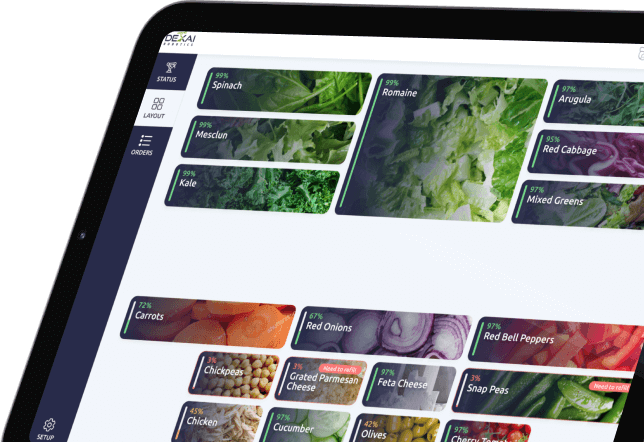
Dexai Robotics: graphical user interface for robot operatio

Toyota custom ERP/CRM system

A media buying system for a leading US-based advertising agency

We’ve been working with SumatoSoft for a few years, starting from the initial monitoring system, so they already understood our environment quite well. At the same time, they still managed to surprise us with their professionalism.

I was impressed by SumatoSoft’s prices, especially for the project I wanted to do and in comparison to the quotes I received from a lot of other companies.
Also, their communication skills were great; it never felt like a long-distance project. It felt like SumatoSoft was working next door because their project manager was always keeping me updated. Initially.

SumatoSoft is the firm to work with if you want to keep up to high standards. The professional workflows they stick to result in exceptional quality.
Important, they help you think with the business logic of your application and they don’t blindly follow what you are saying. Which is super important. Overall, great skills, good communication, and happy with the results so far.

We brought in SumatoSoft to help us reduce unexpected turbine failures, and the result met our expectations. From the early stages, their team demonstrated a strong understanding of our business domain and the constraints of working with existing SCADA systems. They took a proactive approach, carefully analyzing our requirements and proposing a solution that enhanced our infrastructure without disrupting it. Communication was clear and structured, and the project was managed professionally, with all milestones delivered on time.

Rivalfox had the pleasure to work with SumatoSoft in building out core portions of our product, and the results really couldn’t have been better.
SumatoSoft provided us with engineering expertise, enthusiasm and great people that were focused on creating quality features quickly.

Transparent pricing options
Four engagement models cover most super app projects. Whichever you pick, the same rules apply: no hidden fees, estimates we stand behind, a monthly report you can reconcile, and one point of contact for the whole account. See engagement models for the full comparison.
Super app budgets scale with the number of modules, integration complexity, compliance scope, and the extent to which your platform is already in place. A single module launched inside an app you already own is the smallest starting point. A shell with a wallet and several modules is a different order of investment. Run your own numbers with our software development cost calculator, or send us a module list and we will estimate against it.
 Fixed price
 Time and Materials
 T&M with Cap
 Dedicated Team
Fixed price
A defined scope at a defined cost. Budget and timeline lock at the start. This works for a single module, an audit, a maintenance contract, or any scope where requirements are stable, and the deliverable is clear.
Time and Materials
You are billed monthly for hours actually worked. Maximum flexibility, full visibility. This suits long super-app builds where the backlog reorders as you learn what users do with the initial modules.
T&M with Cap
Time and Materials with an agreed ceiling. We prioritize the highest-value features against your budget and stop at the cap. This covers most iterative super app work and is the model clients choose most often.
Dedicated Team
A named team working only on your product, billed monthly. This fits multi-year super app programs where you want the same engineers across module after module.
Let’s start
If you have any questions, email us info@sumatosoft.com

Frequently asked questions
What is a super app, and how is it built?
A super app hosts many services as mini-apps within a single shell. The build has five layers: the host shell, the mini-program engine that runs the mini-apps, the SDK your teams build against, a shared wallet, and one identity layer. We build the shell in React Native or Flutter, or fully native when performance demands it. Most clients start with the shell, the wallet, and one module in the first release.
What are recognized examples of super apps?
WeChat in China, Alipay in China, Gojek in Indonesia, Grab across Southeast Asia, and Rappi in Latin America. Each began with one strong service, messaging for WeChat and ride-hailing for Grab, then added mini-apps around it once daily usage was established.
How is AI changing super apps?
The interface is shifting from a grid of icons to an agent that acts on intent. A user requests a ride or a bill payment, and the agent calls the appropriate mini-app to complete the task. Alibaba’s Qwen app has been doing this in production since January 2026, with Alipay handling payments after explicit user confirmation.
How much does it cost to build a super app?
Cost tracks module count, integration complexity, compliance scope, and the extent to which your platform already exists. A single module launched inside an app you already own is the low end. A shell with a wallet, an identity layer, several modules, and a payment integration runs considerably higher. Use our cost calculator for a scoped figure, or send us your module list.
How long does it take to build a super app?
Timelines run from 3 to 12+ months, depending on features, integrations, compliance scope, and module count. A first module inside an existing app can go live in three to four months. A shell with a wallet, an identity layer, two modules, and a payment integration is closer to nine. Adding mini-apps to an existing SDK is faster each time.




