Node.js development services
A Node.js development company with 14+ years in custom software, 70% senior engineers, and ISO 27001 certification. We pair a React front end with a Node backend, so one team owns the whole product.







Our Node.js development services
Match your need to a service below. APIs, microservices, and real-time systems are the core of what we build in Node.
Custom web app development
Server-side web applications on Node and TypeScript, from a first MVP to a production system serving steady traffic.
Mobile backend development
The Node backend behind iOS and Android apps: authentication, data sync, push, and the APIs your mobile Client calls.
IoT development
Devices, gateways, and dashboards connected over Node’s event-driven runtime, moving sensor data in real time at scale.
API development and integration
REST and GraphQL APIs that wire your product to payment, CRM, ERP, and third-party services.
Super app development
Multi-service platforms where payments, messaging, and bookings run side by side on one Node backend.
Enterprise software development
Enterprise systems with role-based access, audit trails, and the integrations a large organization already runs on.
Microservices development
We split a system into independent Node services that scale, deploy, and fail on their own, so one bottleneck never stops the product.
Plugin and module development
Node modules and plugins that extend your existing platform without a rewrite.
Migration to Node.js
We move legacy backends to Node and TypeScript in stages, keeping the live system running while we cut over service by service.
Maintenance and support
Ongoing care for an existing Node application: dependency upgrades, performance work, security patches, and on-call support.
Node.js consulting
We review your architecture, stack, and roadmap, then tell you where Node fits and where it does not.
Dedicated development team
A Node team of business analysts, developers, and QA that works as an extension of your in-house staff.
Powerful Node.js solutions we build
These are the application types Node is genuinely built for. Real-time, streaming, and high-concurrency work is Node’s honest sweet spot.

Complex single-page applications
Data-heavy SPAs with a Node backend serving a React or Angular front end from one JavaScript codebase.

IoT applications
Device fleets and dashboards that ingest and react to sensor data as it arrives.

Real-time collaboration tools
Shared editors, whiteboards, and workspaces where many users act on the same data at once.

Streaming applications
Audio, video, and event streams are pushed to large audiences with low latency.

Microservices platforms
Distributed systems where each service scales and ships on its own schedule.

ERP systems
Operational backbones that tie finance, inventory, and HR into one data model.

Social platforms
Feeds, messaging, and notifications that stay live for thousands of concurrent users.

Real-time chat
Messaging built on WebSockets, with presence, history, and delivery state.
How we apply Node.js in industries
We have shipped Node products across regulated and high-traffic industries. A few were the fit is strongest:
Healthcare
- HIPAA-enabling architecture with access controls and audit logging
- Patient portals and provider dashboards
- Device and EHR data exchange over real-time APIs (HL7/FHIR)
- Telemedicine video and messaging on WebSockets
- Appointment scheduling with automated reminders

Fintech
- Payment and transaction backends
- Real-time balances and notifications
- Audit trails and role-based access for compliance reviews
- Third-party integrations for processors, KYC, and ledgers

Logistics
- Live tracking and route updates
- Warehouse and inventory systems
- Carrier and ERP integrations

Edtech
- Live classrooms and collaboration tools
- Course platforms with progress tracking
- Assessment and content delivery at scale
- Video streaming and interactive whiteboards
- Cohort analytics and reporting for instructors

Real-time SaaS
- Multi-tenant products with per-account isolation
- Dashboards and collaboration features
- Usage metering and billing integrations
- Live notifications and activity feeds

Name your niche
- We map your domain rules into the backend, not around them
- Real-time data flows wherever your product moves information
- Integrations with the tools and systems your industry already runs on
- Compliance and access controls scoped to your regulatory context

Modern Node in 2026
Node in 2026 is not the Node of 2019. We pick Node when these strengths match the product:

Non-blocking I/O and concurrency
One Node process handles thousands of simultaneous connections without a thread per request, which is why it fits real-time and high-traffic APIs.

npm ecosystem
The largest package registry in software means most building blocks already exist, so we build features instead of plumbing.

V8 performance
Node runs on Google’s V8 engine, the same one that powers Chrome, so compute-bound request handling stays fast without you paying for extra servers to keep up.

Scalability and microservices
Node’s lightweight runtime makes it cheap to run many small services and scale the busy ones independently.

Full-stack JavaScript
One language across the React front end and the Node backend lets a single team own the product and share code between layers.

MVP speed
A rich ecosystem and one shared language get a working product in front of users faster, which matters most for startups.
Node.js: the engine behind AI products
Where the model thinks, and the front end shows it, Node runs it.
Node.js is the engine behind AI products. It calls the models, streams responses token by token (its non-blocking I/O is built for exactly this), runs retrieval (RAG) and tool-calling, hosts autonomous agents, and exposes your tools as MCP servers, all in the same TypeScript as your front end. In 2026, TypeScript passed Python in usage, and the JavaScript AI stack is production-ready. You no longer need a separate Python service for application-layer AI.
We build with the Vercel AI SDK, the leading TypeScript AI toolkit, with one provider-agnostic interface across OpenAI, Anthropic, and Gemini; its Core runs server-side on Node. We use LangChain.js for orchestration and RAG, and Mastra for production agents and workflows, wired to whichever models you run. React renders the AI experience and Node runs it, which together make a full-stack JavaScript AI product.
The probabilistic parts, agents, retrieval, and tool-calling are governed by our Agentic Development Lifecycle (ADLC), including evaluation and tool-execution approval. The AI engine ships as a governed product you can run in production.

When to choose Node
We pick the right tool, not the one we sell. Node is the right call for I/O-bound, real-time, and full-stack JavaScript products, and now for AI application backends. For CPU-heavy work, we will tell you when Go fits better; for ML training, Python.
| Choose | When it fits | Notes |
|---|---|---|
Node.js |
I/O-bound APIs, real-time (chat, streaming, collaboration), microservices, full-stack JS, AI app backends |
Largest package ecosystem; same language as a React front end |
Go |
CPU-bound or very high-concurrency systems infrastructure, low-latency services |
Compiled performance; Node’s honest weak spot is CPU-heavy work |
Python |
Data science, ML training, heavy numerical and scientific work |
For app-layer AI (agents, RAG, streaming), Node and TypeScript are now fully viable |
Deno / Bun |
Greenfield needs security-by-default (Deno) or fast cold starts and maximum performance (Bun) |
Web-standard APIs and transferable skills; Node stays the enterprise default for ecosystem and LTS |
Tech stack we’ve mastered
The real, current Node stack we build on, confirmed by Engineering.


















Advanced tech we use with Node
Node also anchors the adjacent capabilities we build alongside core backend work.
 IoT development
 AI development
 Big data development
IoT development
Node handles real-time data, device connectivity, and thousands of concurrent connections for IoT ecosystems: smart cities, industrial automation, healthcare monitoring, fleet management, and predictive maintenance.
AI development
We build AI features on the JavaScript and TypeScript stack: Vercel AI SDK, LangChain.js, and Mastra, running on the same Node backend that serves your product. The AI engine section above covers how we ship AI on Node under the ADLC governance lifecycle.
Big data development
For large-scale data streams, Node drives data engineering, analytics, and dashboards: charts and graphs that make the numbers readable.
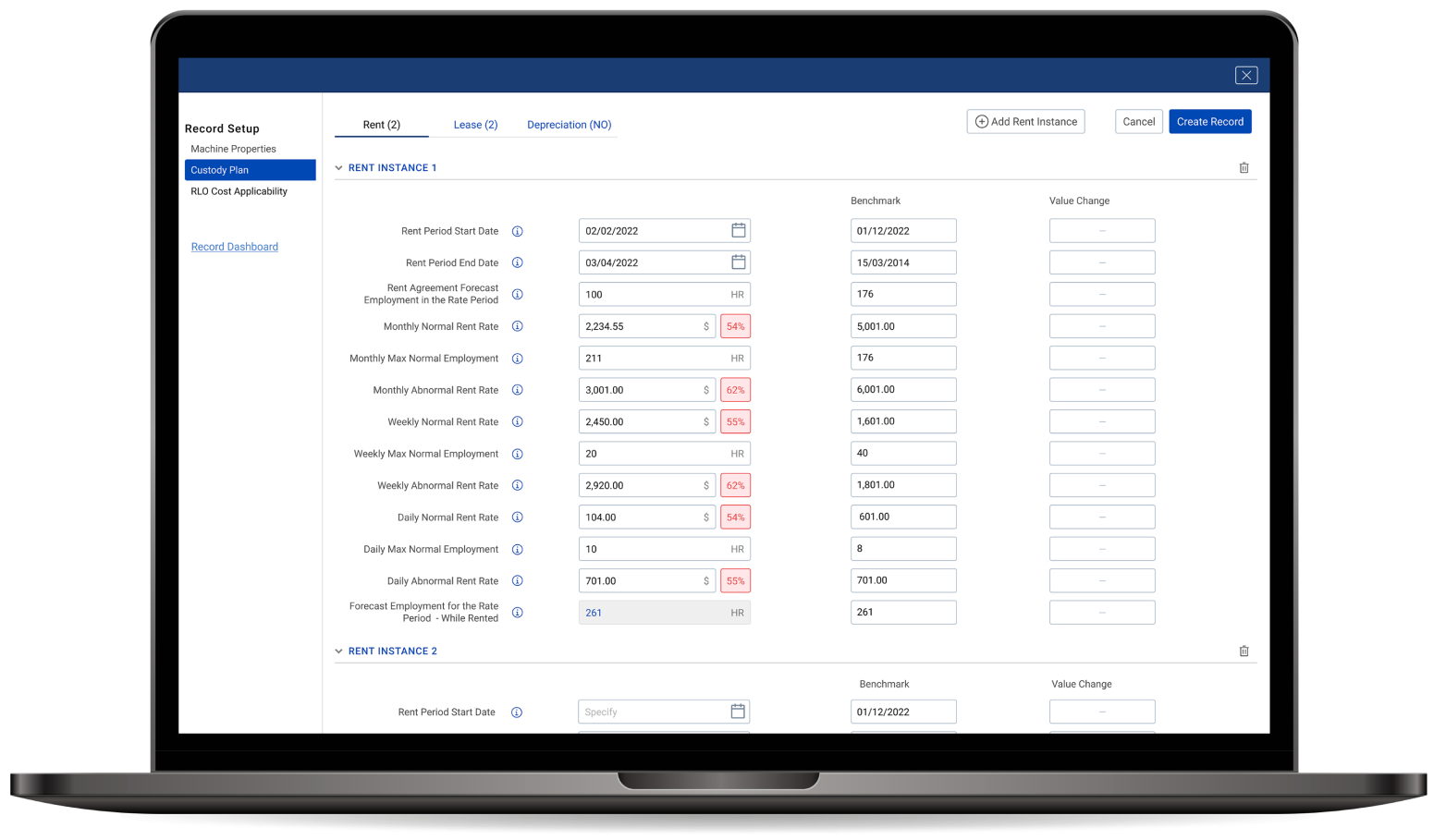
Recent software we developed




Cooperation models we offer
Pick the engagement shape that fits how you want to work.
Software development outsourcing
We own delivery end to end, from business analysis to QA, on a T&M-with-Cap basis so the budget stays predictable.
Staff augmentation
We add senior Node engineers to your existing team, managed by you, for as long as you need the capacity.
Dedicated team
We stand up a full Node team that works only on your product and scales up or down as the roadmap changes.
Why SumatoSoft for Node
One team that owns the whole product. We deliver full-cycle: business analysis, design, development, and QA, with a React front end and a Node backend from the same engineers. When a project needs more than Node, we also build in Java, Ruby on Rails, and Python.

Expertise
Security
Guarantee provided
Scalability
We tried another company that one of our partners had used but they didn’t work out. I feel that SumatoSoft does a better investigation of what we’re asking for. They tell us how they plan to do a task and ask if that works for us. We chose them because their method worked with us.

I was impressed by SumatoSoft’s prices, especially for the project I wanted to do and in comparison to the quotes I received from a lot of other companies.
Also, their communication skills were great; it never felt like a long-distance project. It felt like SumatoSoft was working next door because their project manager was always keeping me updated. Initially.

SumatoSoft is the firm to work with if you want to keep up to high standards. The professional workflows they stick to result in exceptional quality.
Important, they help you think with the business logic of your application and they don’t blindly follow what you are saying. Which is super important. Overall, great skills, good communication, and happy with the results so far.

Together with the team, we have turned the MVP version of the service into a modern full-featured platform for online marketers. We are very satisfied with the work the SumatoSoft team has performed, and we would like to highlight the high level of technical expertise, coherence and efficiency of communication and flexibility in work.
We can confidently say that SumatoSoft has put all our ideas into practice.

We are absolutely convinced that cooperation between companies is only successful when based on effective teamwork (and Captain Obvious is on our side!). But the teams may vary on the degree of their cohesion.

They are very sharp and have a high-quality team. I expect quality from people, and they have the kind of team I can work with. They were upfront about everything that needed to be done.
I appreciated that the cost of the project turned out to be smaller than what we expected because they made some very good suggestions. They are very pleasant to work with.

Rivalfox had the pleasure to work with SumatoSoft in building out core portions of our product, and the results really couldn’t have been better.
SumatoSoft provided us with engineering expertise, enthusiasm and great people that were focused on creating quality features quickly.

We’d like to thank SumatoSoft for the exceptional technical services provided for our business. It should be noted that we started our project’s development with another team, but the communication and the development process in general were not transparent and on schedule. It resulted in a low-quality final product.

SumatoSoft succeeded in building a more manageable solution that is much easier to maintain. Their project management reflects the excellence of a larger company. Their team delivers high-quality results, attentive service, and reasonable pricing.

When looking for a strategic IT-partner for the development of a corporate ERP solution, we chose SumatoSoft. The company proved itself a reliable provider of IT services.

Thanks to SumatoSoft’s can-do attitude, amazing work ethic, and willingness to tackle clients’ problems as their own, they’ve become an integral part of our team. We’ve been truly impressed with their professionalism and performance and continue to work with the team on developing new applications.
We are completely satisfied with the results of our cooperation and will be happy to recommend SumatoSoft as a reliable and competent partner for development of web-based solutions

We’ve been working with SumatoSoft for a few years, starting from the initial monitoring system, so they already understood our environment quite well. At the same time, they still managed to surprise us with their professionalism.

We’d like to sincerely thank SumatoSoft for the work they’ve done on our maintenance system. At one point, our maintenance efforts became inefficient – long downtimes and rising repair costs became the norm.

From the early stages of the project, SumatoSoft demonstrated a proactive attitude, actively seeking opportunities to enhance the solution and anticipate our needs. They consistently took the initiative to address any potential issues, provide timely updates, and offer solutions to challenges that arose during development. This proactiveness greatly contributed to the project’s success and exceeded our expectations.

Awards & Recognitions













FAQ
Is Node.js good for web development?
Yes. Node.js is a strong fit for web backends that handle many simultaneous connections, real-time features, and API-heavy products. Its non-blocking runtime makes it efficient for I/O-bound work, which covers most web applications.
How much does a Node.js project cost?
A Node.js project typically runs from $10K to $50K and up, depending on complexity. A small MVP or integration sits at the low end; an enterprise platform with microservices or an AI backend sits above $50K.
What are the benefits of outsourcing Node.js development?
Outsourcing gives you a senior Node team without the time and cost of hiring one. You get business analysis, development, and QA from one vendor, and you scale the team up or down as the roadmap changes.
Do you provide post-launch maintenance?
Yes. We keep the application healthy after launch: dependency upgrades, performance tuning, security patches, and on-call support, on a maintenance agreement sized to your product.
Is Node.js faster than other frameworks?
For I/O-bound work, Node is among the fastest options because its event-driven runtime handles many connections without blocking. For CPU-heavy work, a compiled language like Go can be faster.
Let’s start
If you have any questions, email us info@sumatosoft.com