Artificial Intelligence (AI) Consulting Services
AI strategy without the hype. Innovation with measurable ROI.









The dual risks of the AI era
Some companies rush into AI software development, pouring money into complex systems with no real business reason. Others drag their feet until competitors who already use AI pull ahead on productivity and smarter decisions. The goal is to avoid both mistakes.

Risk 1: Getting caught up in the hype
Too many organizations chase the latest AI trends without thinking about the problems they actually need to solve. Teams spend big on custom AI models or experimental platforms when a simpler approach would deliver results faster and for less money. The result is expensive prototypes that never reach the real world.
How we handle this risk:
At SumatoSoft, we keep things grounded. Before we recommend any AI solution, we look hard at your data, your operations, and what it will cost to run. We move ahead only with solutions that deliver clear, measurable value.

Risk 2: The price of standing still
Some organizations hesitate, worried about security, return, or whether the company is truly ready, and that hesitation turns into years of delay. Meanwhile, competitors already use AI to automate tedious tasks, speed up product development, and analyze business data in real time. They use AI assistants to cut response times and handle routine customer requests automatically. Wait too long and you lose efficiency and fall behind, as AI becomes the industry standard.
How we handle this risk:
We take a practical approach. Our consulting starts by finding high-impact opportunities that deliver real value fast, with no massive overhaul required on day one. We help you move ahead with AI safely, sensibly, and at the right pace.
Start your AI journey today
Contact with our experts to discuss how AI can transform your business.
80+% of enterprise AI initiatives never leave the lab
Only 25% of AI initiatives deliver their expected return, while most stall during experimentation or fail at deployment. The failures usually come from deploying AI without facing the operational and architectural realities underneath it. Here are the most common traps that cause AI initiatives to collapse.
Chasing the hype without a business case
Many organizations begin with AI by experimenting with tools rather than solving specific business problems. Teams build prototypes, internal chatbots, or automation scripts without naming the operational bottleneck they are trying to remove. Without measurable objectives, those projects rarely move beyond experimentation.
The SumatoSoft reality:
Before recommending any technology, we find the operational bottlenecks where AI can create measurable value. Our consultants model the expected return, the operational impact, and the infrastructure costs before development begins. Only then do we recommend moving to AI PoC development.
Building AI on top of fragmented data
Artificial intelligence depends on clean, accessible, well-structured data. In practice, most enterprise data is scattered across legacy systems, spreadsheets, internal databases, and external tools. Without integration and governance, AI systems can’t reliably reach or interpret it. That is why 47% of CEOs report poor data readiness as the main obstacle to AI adoption at scale.
The SumatoSoft reality:
Our consulting begins with a deep audit of your data architecture, APIs, and infrastructure. If that foundation isn’t ready for AI, we design a practical modernization roadmap before we introduce any AI systems.
Feeding proprietary data into insecure AI tools
Public AI platforms make experimentation easy, but they also bring serious security risks. When employees paste proprietary information into public models, the company risks exposing its intellectual property, customer data, or sensitive internal documents. In regulated industries, that can turn into compliance violations and legal exposure.
The SumatoSoft reality:
We design secure AI architectures that protect enterprise data from day one. They run on isolated cloud environments, controlled APIs, and strict governance policies, so sensitive information never leaks into public models.
Treating AI as a tool instead of a system
AI projects often fail because companies treat them as software features rather than operational systems. Production AI needs data pipelines, monitoring, model governance, cost management, and human-in-the-loop controls. Without those, even a successful prototype becomes unreliable in production. That is why analysts estimate 70–85% of AI initiatives fail without structured implementation frameworks and governance.
The SumatoSoft reality:
We treat AI as an engineering discipline, not an experiment. Our engagements design the full architecture needed to deploy AI safely, predictably, and at enterprise scale. The organizations that succeed with AI build controlled systems that deliver measurable operational gains, and that is exactly what our consulting framework is built to achieve.
What do SumatoSoft’s AI consulting services include?
AI can drive real results, but only with the right foundation behind it. That is where our consulting comes in. We help you move from scattered experiments to AI systems that deliver, with your technology, data, and business objectives aligned.


AI strategy & use-case prioritization
Many organizations struggle to see where AI creates the most business value. We work with your executives and operational teams to find high-impact opportunities and rank them on a few factors.
- Expected ROI.
- Implementation complexity.
- Data readiness.
- Strategic alignment with business objectives.
- Strategic AI integration into existing systems.

LLM & agentic architecture design
Modern AI systems increasingly use large language models (LLMs) and multi-agent architectures to automate complex workflows. Our architects design secure, scalable AI infrastructure that fits your existing enterprise systems.
This includes:
- Retrieval-augmented generation (RAG) architectures for enterprise knowledge.
- Multi-agent orchestration frameworks.
- Integration with CRM, ERP, and internal data platforms.
- Model selection and model-agnostic architecture design.


AI governance, security & compliance strategy
Enterprise AI has to meet strict requirements for security, privacy, and regulatory compliance. We help you design governance frameworks that keep AI inside clear operational guardrails.
This includes:
- AI risk and compliance assessments.
- Legacy modernization for AI readiness.
- Bias monitoring and explainability frameworks.
- Data privacy and model security architecture.
- Human-in-the-loop oversight models.

Cost-per-token & ROI modeling
One of the most overlooked risks in AI is uncontrolled infrastructure and model-usage costs. We build financial models that estimate the true operating cost of an AI system before development begins.
This includes:
- Cloud infrastructure forecasting.
- Token consumption modelling for LLM workloads.
- Operational cost simulations.
- ROI projections for AI initiatives.
Talk to our AI experts
Get personalized advice for your unique project needs.
How does SumatoSoft’s AI consulting process work?
Our consulting framework gives you a concrete plan, one shaped around your data, your technology, and your business priorities. We begin with a deep technical review of your systems to find where AI can make a genuine difference.
The framework runs in a clear sequence of steps, each designed to move you from an initial assessment to a plan you can act on.
No AI project succeeds without good, accessible, secure data.
We start with our engineers reviewing your environment end to end, from data sources and quality to APIs, system integrations, cloud capacity, and security policies. We assess whether your business is ready for AI, whether that means generative assistants, predictive models, or more advanced workflows.
If your systems need work, we lay out a modernization plan first, so the foundation is in place before anyone builds anything.
AI should solve real operational problems, the ones that genuinely slow you down.
We work with your team to identify AI opportunities across departments, from operations and support to finance, logistics, and engineering. We then rank each one by its likely impact, its implementation difficulty, and how quickly it delivers results.
You come away with a clear, prioritized list of AI projects suited to your business, such as knowledge assistants, document automation, predictive analytics, and operational dashboards.
You don’t need to build from scratch for every problem. We help you decide whether it is smarter to buy off-the-shelf AI tools or develop something custom. We compare the available options, including existing platforms, SaaS tools, costs, integration requirements, and how each one handles your data and intellectual property.
Many companies settle on a hybrid approach that combines commercial AI with custom work, which is usually the fastest, most flexible, and most cost-effective path forward.
AI needs guardrails. We design a governance plan that keeps your AI systems compliant and controlled.
It covers tight access controls, human review at key decision points, ongoing monitoring, and the standards your industry requires, such as ISO 27001 or SOC 2. This layer keeps your AI reliable, transparent, and aligned with your policies.
At the end, you have a concrete plan, a step-by-step blueprint for bringing AI into your business.
You get
- A ranked list of the highest-impact AI projects. A secure architecture for rolling out AI.
- A full breakdown of costs and infrastructure for your first proof of concept.
You also get a recommended development roadmap built on our Agentic Development Lifecycle (ADLC). Instead of moving between disconnected tools, you get a clear path to AI systems that deliver measurable results.
How can you engage SumatoSoft for AI consulting?
We structure our engagements as time-boxed programs, each designed to move you from uncertainty to a concrete AI implementation plan.
 AI viability audit
 Use-case & ROI discovery session
 Fractional Chief AI Officer (CAIO)
Engagement 1: AI viability audit
Duration: 2 weeks
Format: Fixed-price engagement
Before investing in AI, organizations need to understand whether their infrastructure, data architecture, and security model can support real AI systems.
During the AI Viability Audit, our engineers perform a structured technical and operational assessment.
What we analyze:
- Data architecture and data availability.
- Cloud infrastructure and API readiness.
- Security posture and compliance requirements.
- Existing analytics and automation capabilities.
- Operational bottlenecks where AI may create measurable value.
As a result, you receive an AI readiness assessment report, an evaluation of your infrastructure and data architecture, a security and compliance risk overview, and an initial list of AI use cases relevant to your organization.

Engagement 2: use-case & ROI discovery session
Duration: 3 weeks
Format: Fixed-price engagement
Once feasibility is confirmed, the next step is identifying where AI can generate measurable business value.
During this sprint, our consultants collaborate with business leaders, product owners, and technical teams to discover and prioritize AI opportunities.
Activities during the session:
- Stakeholder interviews across departments.
- Operational workflow analysis.
- Use-case ideation and feasibility assessment.
- Cost-per-token infrastructure modeling.
- ROI forecasting for prioritized AI initiatives.
You receive a prioritized AI opportunity portfolio, ROI projections for the top three AI use cases, an architecture blueprint for the recommended solution, and a fixed-scope proposal to build your first AI proof of concept.

Engagement 3: fractional chief AI officer (CAIO)
Format: Monthly advisory partnership
Some organizations want to move forward with AI, but do not yet require a full-time executive AI leader.
Our Fractional CAIO program provides ongoing strategic guidance and technical oversight from senior AI consultants.
Typical responsibilities:
- AI strategy and roadmap oversight.
- Vendor and model evaluation.
- Architecture governance and security review.
- AI risk and compliance advisory.
- Executive-level AI education and decision support.
This model allows organizations to build AI capabilities with experienced leadership without committing to a full-time executive hire.

What AI tech stack does SumatoSoft consult on?
























We won’t force AI if you don’t need it
Not every business challenge needs machine learning, generative AI, or autonomous agents. Often the fastest and safest solution is still well-engineered traditional software. At SumatoSoft we work as a dual-engine engineering firm. We bring together two complementary capabilities and know exactly when to apply each one: traditional software development (the SDLC) or AI and agentic development (the ADLC).
| Dimension | Traditional Software Development (SDLC) | AI / Agentic Development (ADLC) |
|---|---|---|
System Behavior |
Fully predictable outputs for given inputs |
Outputs may vary based on data, context, and model reasoning |
Core Technologies |
Backend systems, APIs, databases, business logic |
Machine learning models, LLMs, RAG systems, autonomous agents |
Data Requirements
|
Structured data for transactions and operations |
Large datasets for training, inference, or knowledge retrieval |
Development Focus |
Engineering reliable systems and workflows |
Building intelligent systems that learn, generate, or optimize |
QA Approach |
Unit testing, integration testing, QA automation |
Model evaluation, prompt testing, safety checks, human-in-the-loop validation |
Risk Profile |
Low operational unpredictability |
Requires guardrails, monitoring, and governance |
What’s in your executive AI blueprint?
At the end of the engagement, you receive a structured AI Blueprint your leadership team can act on right away. It is a thorough document that turns your business goals, data readiness, and technology constraints into a practical plan for putting AI to work inside your organization. Your executive AI blueprint includes five things.
- A focused list of top AI opportunities
A focused list of your top AI opportunities. We examine your most significant bottlenecks, the data you already hold, and the places where automation can make a real difference.
- A hands-on AI architecture plan
A practical AI architecture plan. Our engineers map the technical setup needed to launch the solution safely within your current systems.
- A clear security and governance game plan
A clear security and governance plan. AI must operate within strict rules, especially around sensitive data, so the blueprint sets out how we protect your data, who can access what, and how we monitor the models.
- A straightforward cost and infrastructure estimate
A straightforward cost and infrastructure estimate. Leadership gets a clear breakdown of what it takes to run the system, from cloud costs and model fees to integration work.
- A step-by-step roadmap for your first Proof of Concept
A step-by-step roadmap for your first proof of concept. We map out what the first pilot looks like, including the scope, the timeline, and exactly how we build it using our Agentic Development Lifecycle (ADLC).

This blueprint sets the stage for your AI transformation.
It helps your team get everyone on board, secure funding, and launch with confidence. Instead of vague ideas, you get a concrete plan that ties your business goals directly to a clear technical path into production.
What AI has SumatoSoft delivered?



The system has produced a significant competitive advantage in the industry thanks to SumatoSoft’s well-thought opinions. They shouldered the burden of constantly updating a project management tool with a high level of detail and were committed to producing the best possible solution.

I was impressed by SumatoSoft’s prices, especially for the project I wanted to do and in comparison to the quotes I received from a lot of other companies.
Also, their communication skills were great; it never felt like a long-distance project. It felt like SumatoSoft was working next door because their project manager was always keeping me updated. Initially.

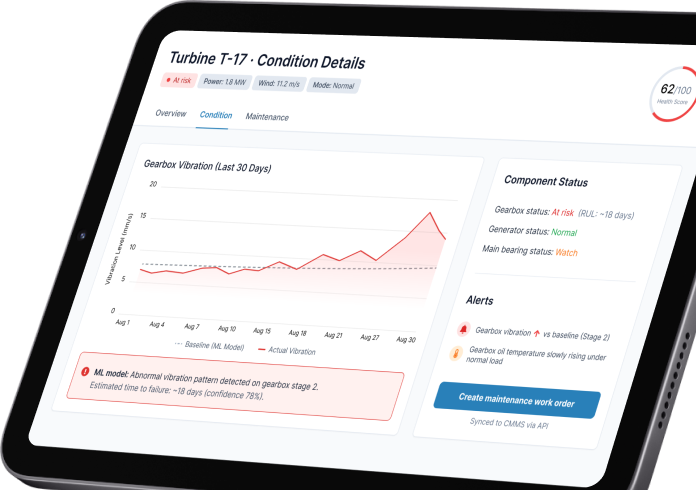
We brought in SumatoSoft to help us reduce unexpected turbine failures, and the result met our expectations. From the early stages, their team demonstrated a strong understanding of our business domain and the constraints of working with existing SCADA systems. They took a proactive approach, carefully analyzing our requirements and proposing a solution that enhanced our infrastructure without disrupting it. Communication was clear and structured, and the project was managed professionally, with all milestones delivered on time.

We tried another company that one of our partners had used but they didn’t work out. I feel that SumatoSoft does a better investigation of what we’re asking for. They tell us how they plan to do a task and ask if that works for us. We chose them because their method worked with us.

SumatoSoft is the firm to work with if you want to keep up to high standards. The professional workflows they stick to result in exceptional quality.
Important, they help you think with the business logic of your application and they don’t blindly follow what you are saying. Which is super important. Overall, great skills, good communication, and happy with the results so far.

Working with SumatoSoft has been an outstanding experience. Their team is not only highly skilled but also incredibly responsive, collaborative, and committed to delivering quality results. I can’t recommend them enough! Thank you team SumatoSoft for bringing my vision to life.

Together with the team, we have turned the MVP version of the service into a modern full-featured platform for online marketers. We are very satisfied with the work the SumatoSoft team has performed, and we would like to highlight the high level of technical expertise, coherence and efficiency of communication and flexibility in work.
We can confidently say that SumatoSoft has put all our ideas into practice.

We are absolutely convinced that cooperation between companies is only successful when based on effective teamwork (and Captain Obvious is on our side!). But the teams may vary on the degree of their cohesion.

They are very sharp and have a high-quality team. I expect quality from people, and they have the kind of team I can work with. They were upfront about everything that needed to be done.
I appreciated that the cost of the project turned out to be smaller than what we expected because they made some very good suggestions. They are very pleasant to work with.

Rivalfox had the pleasure to work with SumatoSoft in building out core portions of our product, and the results really couldn’t have been better.
SumatoSoft provided us with engineering expertise, enthusiasm and great people that were focused on creating quality features quickly.

SumatoSoft succeeded in building a more manageable solution that is much easier to maintain. Their project management reflects the excellence of a larger company. Their team delivers high-quality results, attentive service, and reasonable pricing.

Thanks to SumatoSoft’s can-do attitude, amazing work ethic, and willingness to tackle clients’ problems as their own, they’ve become an integral part of our team. We’ve been truly impressed with their professionalism and performance and continue to work with the team on developing new applications.
We are completely satisfied with the results of our cooperation and will be happy to recommend SumatoSoft as a reliable and competent partner for development of web-based solutions

From the early stages of the project, SumatoSoft demonstrated a proactive attitude, actively seeking opportunities to enhance the solution and anticipate our needs. They consistently took the initiative to address any potential issues, provide timely updates, and offer solutions to challenges that arose during development. This proactiveness greatly contributed to the project’s success and exceeded our expectations.

SumatoSoft is flexible, efficient, and extremely good at planning and being proactive. They have also been very proactive in their approach throughout the project, seeking to understand the needs and the reasons behind them before launching into development, which has been helpful for maintaining direction and consistency, especially because the end client is regularly generating new ideas for added features.

Awards & Recognitions
Which AI maturity stage is your business in?
Organizations pass through several stages before AI becomes a reliable operational capability. Early efforts usually begin with small experiments. Over time, companies connect AI systems to internal data and business processes. Eventually, AI becomes embedded in workflows and can run complex tasks on its own, under strict governance.
 Level 1: Ad-hoc & unstructured
 Level 2: Isolated copilots
 Level 3: Connected intelligence
 Level 4: Governed autonomy
Level 1: Ad-hoc & unstructured
Employees experiment with public AI tools such as chatbots or code assistants, with no formal company strategy. Adoption is fragmented, security policies are unclear, and sensitive data can leak to external services.
Typical characteristics:
- Shadow AI usage across departments.
- No centralized governance or model policies.
- No secure connection to internal enterprise data.
- Unclear ROI or measurable business impact.
Our consulting efforts:
Establish foundational guardrails, define an internal AI policy framework, and create a secure architecture for enterprise AI usage.

Level 2: Isolated copilots
Organizations start adopting off-the-shelf AI tools for productivity tasks such as document summarization, coding help, or customer-support automation. The tools deliver local wins but stay disconnected from proprietary data and core business systems.
Typical characteristics:
- AI tools used in individual teams.
- Limited integrations with enterprise platforms.
- No unified AI architecture.
- Minimal governance or lifecycle management.
Our consulting efforts:
Assess data readiness and architecture for secure AI integration. Identify high-impact use cases where AI can connect to internal knowledge and systems.
Level 3: Connected intelligence (RAG-driven systems)
AI systems start reaching enterprise data securely through retrieval-augmented generation (RAG), knowledge bases, and structured data pipelines. At this stage, employees can query company knowledge, documentation, and analytics in plain language.
Typical characteristics:
- AI connected to internal knowledge bases and databases.
- Secure APIs and controlled data access.
- Operational copilots for research, analytics, and documentation.
- Measurable productivity improvements.
Our consulting efforts:
Design scalable AI architecture, optimize data pipelines, and identify opportunities to automate multi-step workflows.
Level 4: Governed autonomy (agentic AI systems)
AI grows from assistant tools into autonomous systems that run complex workflows across multiple platforms. Multi-agent architectures coordinate tasks such as document processing, operational decision support, and business-process automation. Strict governance frameworks keep these systems secure, explainable, and aligned with your business objectives.
Typical characteristics:
- Autonomous AI agents executing operational workflows
- Multi-system integrations across enterprise platforms
- Continuous monitoring, evaluation, and governance
- Clear ROI and measurable operational impact
Our consulting efforts:
Implement agent orchestration architectures, establish lifecycle governance, and scale AI systems across the organization.
Frequently asked questions
What is AI consulting, and when does a business need it?
AI consulting is expert guidance on where and how to apply AI to a real business problem, before you commit to building anything. A good engagement audits your data, infrastructure, and workflows. It identifies the use cases with the clearest ROI and produces a cost roadmap to production. You need it when the opportunity is unclear, when a pilot has stalled, or when you want a defensible business case before spending on development. At SumatoSoft, every engagement is fixed-price and time-boxed, and it ends with a roadmap you can act on, not a slide deck.
How do you choose an AI consulting company?
Ask whether the consultant also builds what they recommend. Advice from a team that has shipped AI to production survives contact with real data; advice from a pure strategy shop often doesn’t. Check that they’re vendor-neutral, so the recommended stack fits your data and total cost, not their partnerships. Confirm the engagement is fixed-price and time-boxed, so you know the cost and the deliverables on day one. And make sure they’ll tell you when AI isn’t the answer. A partner willing to recommend simpler software when that’s the honest call is one you can trust with a bigger build.
How much does AI consulting cost?
Our consulting engagements are fixed-price and time-boxed, so you know the number before you start. A 2-week AI Viability Audit and a 3-week Use-case & ROI Discovery each fall in the low five figures. The exact number is set by the size of your data estate and how many systems are in scope. Each one ends with concrete deliverables: a readiness report, a prioritized use-case portfolio, an architecture blueprint, and a fixed-price proposal for the first proof of concept. Development is scoped separately. You can get an early estimate from our cost calculator.
Will your consulting engagement just be a sales pitch for a massive AI development project?
No. SumatoSoft is a dual-engine engineering firm, so our consulting stays objective. If the audit shows your bottleneck is better solved with traditional, deterministic software, such as a standard ERP upgrade or data modernization, we will tell you. We don’t push AI where a traditional Software Development Life Cycle (SDLC) is the safer, more cost-effective choice.
Is your AI consulting an open-ended, hourly engagement?
No. Executives need financial predictability, so our core services, such as the AI Viability Audit and the ROI Discovery Sprint, are time-boxed (typically 2 to 4 weeks) and fixed-price. You know exactly what the engagement costs and exactly what you will receive on day one.
Let’s start
If you have any questions, email us info@sumatosoft.com





