

QA & Testing Services for Traditional and AI Software
Traditional testing fails on AI-driven software. SumatoSoft is a Dual-Engine engineering firm. We run rigorous deterministic QA (Manual, Automation, API) for your software, and apply advanced LLMOps Evals, Red-Teaming, and RAG-scoring to ensure your Generative AI features never hallucinate or leak data.






We test both code and AI
Modern software combines deterministic logic with AI-driven components. We design QA that evaluates both with clear methods, measurable criteria, and defined outcomes.
 Deterministic QA for software systems
 Probabilistic QA for AI systems
 Unified quality across your system
Deterministic QA for software systems
We verify that your software behaves exactly as intended across all layers from individual components to complete workflows.
Our QA covers:
- Functional validation of features and business logic
- Integration and API testing across systems
- Regression control for continuous releases
- Performance and stability under real load
- Security validation aligned with industry standards
Every test is structured, repeatable, and aligned with your release criteria.

Probabilistic QA for AI systems
AI systems are evaluated through defined and measurable criteria.
We evaluate how your AI behaves in real scenarios and ensure outputs remain consistent, accurate, and aligned with your system logic.
Our AI QA includes:
- Context precision and answer consistency evaluation
- Detection of reasoning deviations across scenarios
- RAG system validation (retrieval accuracy and response quality)
- Prompt injection resistance and consistent interaction behavior
- Continuous evaluation integrated into your workflows
AI behavior is continuously evaluated, scored, and aligned with system logic.

Unified quality across your system
We align both QA approaches into a single, unified process.
- Software logic is validated
- AI behavior is evaluated
- Release readiness is defined by measurable criteria
You operate with full visibility into system quality across every component that drives your product.

Get a Free QA Quote
Discover how our tailored QA can fit your budget.
Our QA services
Our QA testing services work around how your product is built, released, and scaled.
Each engagement model defines clear responsibility, predictable execution, and measurable outcomes.
Full-cycle QA ownership
We take full responsibility for quality across your product lifecycle.
We define the QA strategy, build coverage, execute testing, manage environments, and report results in a structured way.
Your team works with one accountable partner from planning to release.
You get:
- Dedicated QA team aligned with your product
- End-to-end test coverage across systems and flows
- Structured reporting with clear quality metrics
- Release readiness based on defined acceptance criteria
QA consulting and audit
We evaluate your current QA setup and define how it should operate.
We analyze your processes, coverage, tools, and risks. Then we deliver a clear QA model aligned with your product, team, and release goals.
You get:
- Independent QA assessment
- Defined QA strategy and coverage model
- Tooling and process recommendations
- Clear roadmap for improving quality and efficiency
Managed testing
We execute testing operations under your priorities and roadmap.
You define scope and direction. We manage execution, coverage, and reporting, ensuring consistent quality across releases.
You get:
- Scalable QA team aligned with your workload
- Controlled test execution across cycles
- Regular reporting with measurable progress
- Coordination with your internal teams
QA as a service
We provide QA capacity when and where you need it.
Our engineers integrate into your team and workflows, supporting releases, sprints, or specific testing needs.
You get:
- Fast onboarding of QA engineers
- Flexible engagement based on your needs
- Seamless integration with your tools and processes
- Transparent tracking of work and results
QA testing services for AI-driven systems
We validate how your AI behaves in real operational conditions – with measurable evaluation, controlled execution, and consistent output quality.

RAG evaluation and response accuracy
Evaluation of how your AI retrieves and uses information. Each response is measured for context precision and faithfulness, ensuring outputs remain aligned with your data and business logic.

Prompt injection and adversarial testing
We test how your AI responds to complex and edge-case inputs. Structured red-teaming scenarios verify that the system follows defined access rules and maintains consistent behavior under varied conditions.

Reasoning consistency and drift monitoring
We continuously evaluate how your AI makes decisions over time. This maintains stable reasoning patterns and predictable outputs as models and data evolve.

Synthetic test data generation
We create controlled datasets that reflect real-world complexity. This enables large-scale testing without dependency on sensitive or production data, while maintaining high coverage across scenarios.

Agent workflow validation
This QA service is about testing AI systems that execute multi-step actions. Each step of the workflow is validated in controlled environments to ensure correct sequencing, accurate decisions, and reliable outcomes.
Full-spectrum QA strategy
We structure QA testing services as a system that combines human evaluation, automated validation, and AI-specific assessment. Each layer serves a defined role and operates together as a single, controlled process.

Human-in-the-loop validation
We apply manual testing where user behavior, interface logic, and real-world scenarios require evaluation beyond predefined scripts. Our QA engineers validate complete user flows, edge cases, and interaction consistency – ensuring the product behaves naturally in real usage.

Automated validation in CI/CD
We integrate automated testing into your delivery pipeline. Regression suites, API checks, and system validations run continuously – providing fast, consistent feedback across every build and release cycle.

AI and LLM evaluation
We implement evaluation pipelines for AI-driven functionality. Using frameworks such as RAGAS, we measure output quality across defined metrics, including context precision, reasoning consistency, and hallucination control. AI behavior is evaluated continuously and aligned with predefined acceptance thresholds.
Quality is defined by measurable standards
Quality is defined through clear metrics, controlled processes, and consistent execution. Every release is evaluated against agreed criteria, so decisions are based on data.
For traditional software systems
QA is structured around predictable delivery and transparent results. Each release is supported by a clear readiness assessment.
- Regression cycles are executed within defined timeframes, aligned with your release schedule.
- Test coverage is tracked and continuously expanded where it creates measurable value.
- Defects are prioritized, resolved, and verified through a controlled lifecycle.
- QA reports provide full visibility into system readiness at every stage.
For AI-driven systems
AI behavior is evaluated using structured and repeatable metrics. AI quality is managed as an operational parameter with visibility, control, and continuous evaluation.
- Context precision and output consistency are measured against defined thresholds.
- Model responses are evaluated for alignment with expected logic and domain rules.
- System behavior is continuously monitored through controlled evaluation pipelines.
- Deployment decisions are based on measurable performance.
Expertise in business domains
We understand the unique challenges and requirements of each domain. Our QA engineers adapt test strategies to your industry’s context – for example, ensuring HIPAA compliance and data security in healthcare apps, or handling the complex transaction flows and PCI DSS standards in fintech software.

AdTech & Marketing

FinTech

Logistics

Healthcare

Media & Entertainment

Automotive

eCommerce & Retail

Travel & Hospitality

EdTech

Real Estate
Start Your QA Journey
Partner with experts for reliable, high-quality software.
What deliverables you receive
Structured QA outputs are delivered to give you full visibility into product quality and clear control over release readiness.

QA strategy document

Test coverage map

Test cases and automation suites

Bug reports with prioritization

QA dashboards and metrics

AI evaluation reports (for AI-driven systems)
Quality as a controlled business outcome
We design quality assurance as an operational model that supports how your product is built, released, and scaled.
- Every release is evaluated against clearly defined criteria.
- Test coverage, quality thresholds, and acceptance conditions are set upfront and applied consistently across development cycles.
- Your team always understands the current state of the product – what is validated, what is in progress, and what is ready for release.

Our QA approach creates a stable delivery process where quality is visible, measurable, and aligned with business goals.
- Predictable releases
- Clear visibility into product readiness
- Reduced operational overhead
- Confidence in every deployment
Manual testing tools







Automation testing tools



Talk to a QA Expert
Get personalized advice for your unique project needs.
Our recent works
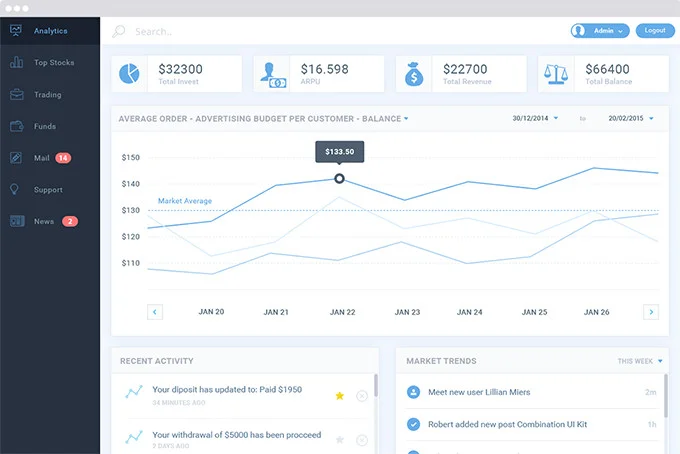



The system has produced a significant competitive advantage in the industry thanks to SumatoSoft’s well-thought opinions.
They shouldered the burden of constantly updating a project management tool with a high level of detail and were committed to producing the best possible solution.

Nectarin LLC aimed to develop a complex Ruby on Rails-based platform, which would be closely integrated with such systems as Google AdWords, Yandex Direct and Google Analytics.

I was impressed by SumatoSoft’s prices, especially for the project I wanted to do and in comparison to the quotes I received from a lot of other companies.
Also, their communication skills were great; it never felt like a long-distance project. It felt like SumatoSoft was working next door because their project manager was always keeping me updated. Initially.

We tried another company that one of our partners had used but they didn’t work out. I feel that SumatoSoft does a better investigation of what we’re asking for. They tell us how they plan to do a task and ask if that works for us. We chose them because their method worked with us.

SumatoSoft is the firm to work with if you want to keep up to high standards. The professional workflows they stick to result in exceptional quality.
Important, they help you think with the business logic of your application and they don’t blindly follow what you are saying. Which is super important. Overall, great skills, good communication, and happy with the results so far.

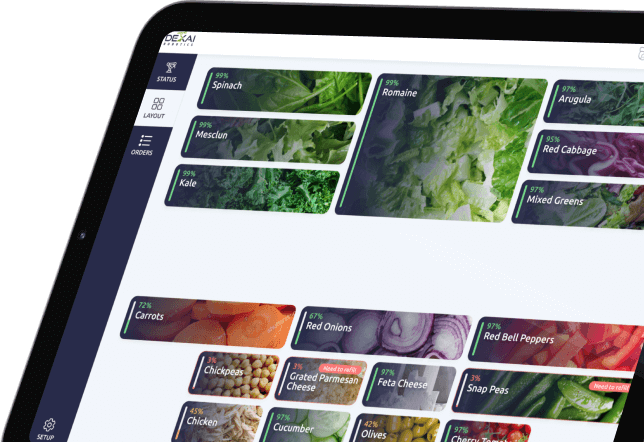
Together with the team, we have turned the MVP version of the service into a modern full-featured platform for online marketers. We are very satisfied with the work the SumatoSoft team has performed, and we would like to highlight the high level of technical expertise, coherence and efficiency of communication and flexibility in work.
We can confidently say that SumatoSoft has put all our ideas into practice.

We are absolutely convinced that cooperation between companies is only successful when based on effective teamwork (and Captain Obvious is on our side!). But the teams may vary on the degree of their cohesion.

They are very sharp and have a high-quality team. I expect quality from people, and they have the kind of team I can work with. They were upfront about everything that needed to be done.
I appreciated that the cost of the project turned out to be smaller than what we expected because they made some very good suggestions. They are very pleasant to work with.

Rivalfox had the pleasure to work with SumatoSoft in building out core portions of our product, and the results really couldn’t have been better.
SumatoSoft provided us with engineering expertise, enthusiasm and great people that were focused on creating quality features quickly.

We’d like to thank SumatoSoft for the exceptional technical services provided for our business. It should be noted that we started our project’s development with another team, but the communication and the development process in general were not transparent and on schedule. It resulted in a low-quality final product.

SumatoSoft succeeded in building a more manageable solution that is much easier to maintain.

When looking for a strategic IT-partner for the development of a corporate ERP solution, we chose SumatoSoft. The company proved itself a reliable provider of IT services.

Thanks to SumatoSoft’s can-do attitude, amazing work ethic, and willingness to tackle clients’ problems as their own, they’ve become an integral part of our team. We’ve been truly impressed with their professionalism and performance and continue to work with the team on developing new applications.
We are completely satisfied with the results of our cooperation and will be happy to recommend SumatoSoft as a reliable and competent partner for development of web-based solutions

How your QA starts and scales
QA is integrated into your product and delivery process from the first step. Quality is defined, measured, and continuously improved within a single, consistent framework.
- The process begins with a structured evaluation of your product and QA maturity.
- Functionality, integrations, performance behavior, and existing testing practices are reviewed.
- For systems with data-driven or AI components, output consistency and evaluation approach are also assessed.
- You receive a clear view of current quality, test coverage, and areas that require attention.
A structured approach defines how quality is managed across your product.
This includes:
- Test scope and priorities
- Coverage levels across features and systems
- Testing approach across manual, automated, and evaluation-driven components
- Tools, environments, and reporting structure
The result is a QA strategy aligned with your product goals, architecture, and release model.
QA is integrated into your development workflow.
- Test environments are configured
- Test cases and automation are prepared
- QA is embedded into your CI/CD pipeline
- Evaluation flows are defined where output validation is required
- Communication and reporting are aligned with your team
QA becomes part of your delivery process and scales with it.
Continuous testing runs aligned with your release cycles. You see progress, quality levels, and release readiness at any moment. What it means in practice:
- Test cycles follow defined coverage and priorities
- Defects are documented, prioritized, and tracked
- System behavior and output consistency are continuously validated, where applicable
- Results are structured into clear, decision-ready reports
QA improves as your product evolves:
- Test coverage expands where it brings value
- Automation increases where it improves efficiency
- Evaluation approaches are refined for systems that rely on dynamic outputs
- Processes are adjusted based on real project data
Awards & Recognitions



Frequently asked questions
How do you perform QA on a RAG (Retrieval-Augmented Generation) system?
Algorithmic evaluation frameworks such as RAGAS or TruLens are integrated into your CI/CD pipeline. The AI is scored on retrieval precision and faithfulness.
How do you perform AI red-teaming and why is it part of QA?
If your app has an open text box connected to an LLM, attackers will try to manipulate it. Red-teaming actively tests the AI through adversarial scenarios such as prompt injections and jailbreaks. This ensures the system does not bypass role-based access controls (RBAC) or expose personally identifiable information (PII).
How do you test for reasoning drift in custom LLMs?
Continuous LLMOps monitoring is implemented. Shadow tests are deployed in production to continuously sample outputs and alert your engineering team when the model begins to hallucinate or deviate from its core system prompt.
How do you test autonomous AI agents that execute multi-step actions, like updating a CRM or sending emails?
Agentic AI is tested through blast radius containment. The agent’s chain of thought is validated in secure, containerized sandbox environments with mocked APIs and cloned databases. Automated assertions verify correct logical execution and adherence to human-in-the-loop (HITL) approval gates.
How do you load-test an application that relies on external LLM APIs (like OpenAI) without spending a fortune on API tokens?
Semantic API mocks are engineered for performance testing. Thousands of concurrent users are simulated while LLM calls are intercepted and replaced with pre-calculated responses at realistic latency. This isolates and stress-tests core infrastructure without unnecessary API costs.
More about SumatoSoft services
Let’s start
If you have any questions, email us info@sumatosoft.com





