Case Study: Custom Logistics Management System Development
TL Nika is a comprehensive solution for companies operating in the logistics industry, covering all the major aspects of transport and cargo management.
Project details:
About the Client:
The Client, the Lithuanian company Sturvalas, specializing in transportation and cargo management, requested help from SumatoSoft to replace their outdated software system with a modern solution, built with the latest technologies and featuring modern design.
- Client: Sturvalas LTD
- Location: Vilnius, Lithuania
- Industry: Logistics
- Team size: 5 (3 Ruby on Rails developers, 1 Senior Developer/Team Lead, 1 Part-time Scrum Master)
- Project duration: 18 months
Business challenge
The legacy application was in dire need of redevelopment and functionality upgrades to protect the Client’s strong market position.
Additional requirements:
- redevelopment of the legacy application;
- functionality upgrade;
- integration of modern technologies and design.
Our solution
With a strong emphasis on meeting the Client’s requirements, SumatoSoft built a completely new system from scratch. The use of state-of-the-art technology and refined software architecture provides higher scalability and enables smooth further enhancements. The newly redesigned product features a top-notch UI design, while the enhanced and extended functionality set offers a much wider range of cargo tracking and customer management tools.
Custom CRM system
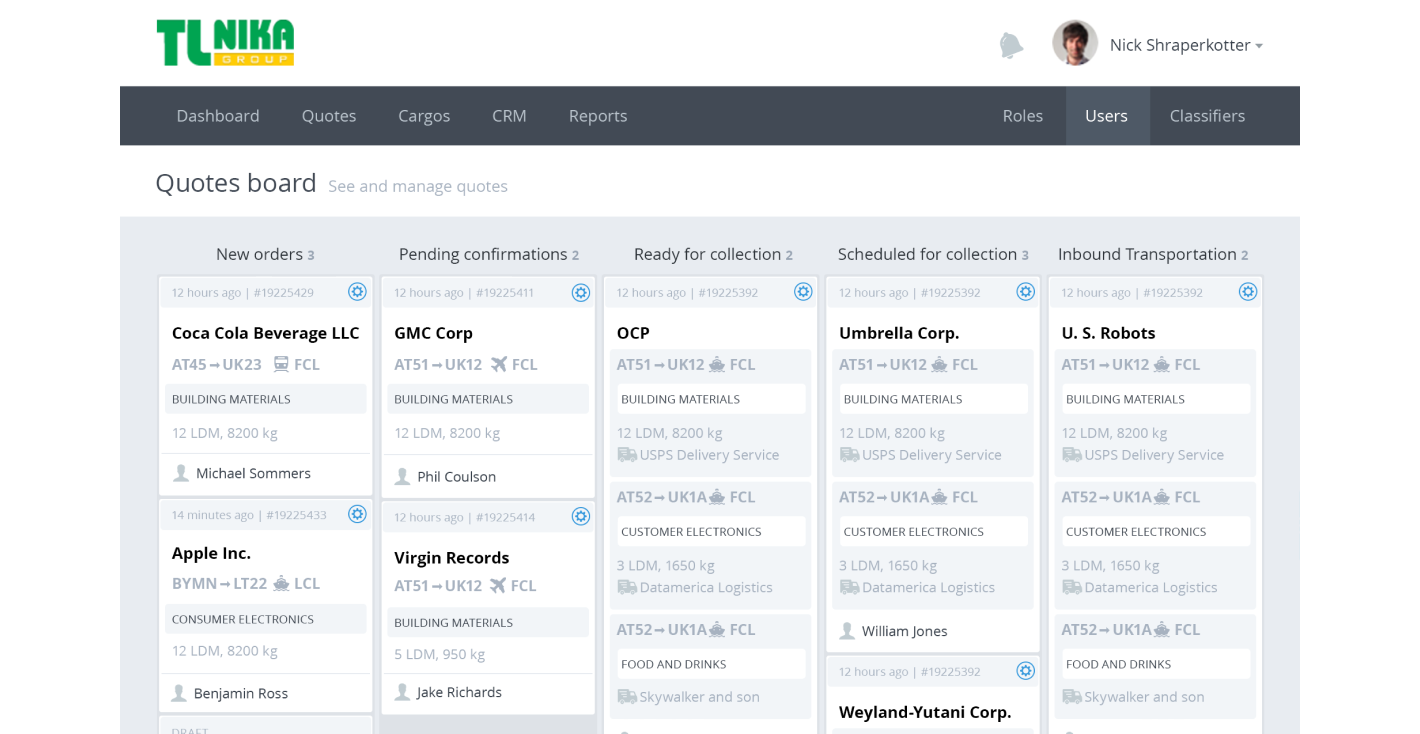
The system is a custom CRM that features complex logic and extended functionality, providing an administrative interface with flexible tools for managing permissions, users, entities, classifiers, and more. The Client portal includes Kanban-like dashboards for monitoring cargo status updates in real-time.

Additional features:
- quotes management, tracking of shipping requests, cost calculation;
- orders management, real-time cargo tracking from dispatch to warehouse delivery;
- accounting module;
- waybill print module.

Business value
SumatoSoft succeeded in building a more manageable solution that is much easier to maintain. Their project management reflects the excellence of a larger company. Their team delivers high-quality results, attentive service, and reasonable pricing.

Before:
- An outdated software system, lacking modern design and technology, leading to an inability to maintain a strong market position.
- Inefficiencies and high operational costs due to the use of an outdated system.
- Limited cargo tracking capabilities, presenting challenges in managing cargo routes effectively.
After:
- Introduction of a new platform with state-of-the-art technology, offering scalability, enhanced UI design, and extended functionality for cargo tracking and customer management.
- Improved operational efficiency and cost-effectiveness, thanks to the modern, comprehensive management system.
- Real-time freight data tracking capabilities, enabling optimal decision-making and overcoming challenges along cargo routes.





