Case Study: Advanced structural analysis web application for a leading steel distributor
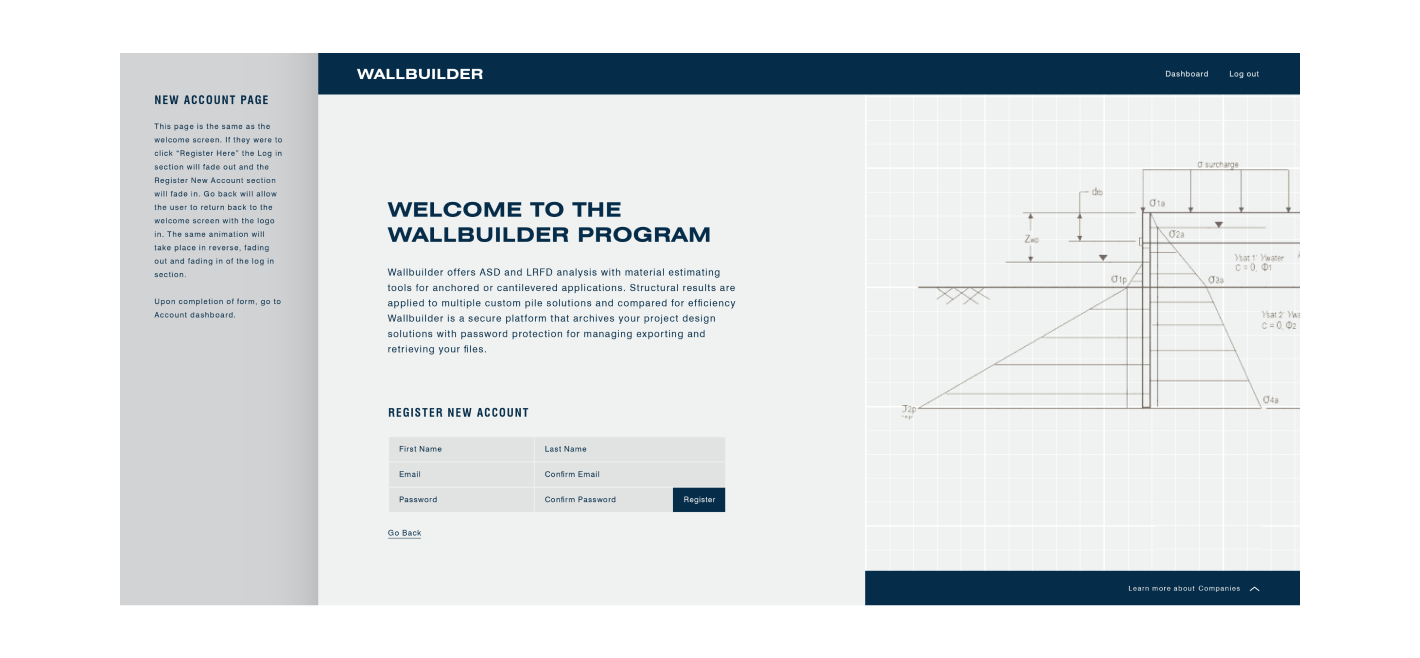
A web application that performs complex structural analysis for geotechnical and structural engineers. The solution includes deep integration with the Client’s Excel spreadsheet, visualization of key parameters, comprehensive calculation record management, and more.
Project details:
About the Client:
Our Client is a leading steel distributor based in Houston, specializing in API line pipe and steel foundation piling systems for heavy civil, marine and oil & gas applications. They possess over 10 stocking locations throughout North America and handle an inventory of 150,000 tons of steel. Their goal was to enhance their services by offering an online tool for structural analysis and material estimation to attract more geotechnical or structural engineers.
Location: USA
Industry: Steel distributor
Team size: 10+ specialists
Project duration: 3 months
Business challenge
The Client’s structural engineers relied on a local Excel spreadsheet for critical load analysis and material estimation. The spreadsheet required manual data entry, kept results locked to individual machines, and provided no visualization – limiting engineers’ ability to share work, compare solutions, or collaborate efficiently. Our task was to deliver a web application that preserved the existing calculation logic while making it accessible, visual, and collaborative.
Our solution
Recognizing the complexity of the Client’s existing calculation model in Excel, SumatoSoft decided on an efficient and cost-conscious approach. We chose to create a web application, integrating the existing Excel model directly into the system. This move not only preserved the robust calculation logic the Client already utilized but also saved significant development time and cost.
The system performs a comprehensive analysis by:
- Generating key measurements: Max Waterline, Max Shear, and Max Deflection to evaluate structural resilience against forces like torsion, compression, or tension.
- Providing design recommendations: Offering guidance on factors such as Minimum Embedment, Pile Length, and Actual Deflection.
- Visualizing data: Graphs for Shear, Deflection, and Moment for three structural solutions, enabling engineers to compare and select the most suitable option.

Features:
- User Dashboard: Stores historical calculation records for future review and analysis.
- Two-Server Setup:
- Web server: Handles user registration, project management, and displays results.
- Calculation server: Runs complex load and material calculations via an integrated Excel spreadsheet.

Additional functionalities:
- Password recovery and account restoration.
- Calculation records management with project history for future reference.
- Ability to alter measurement units.
- New records created when editing projects, maintaining a full calculation history for comparison.
The result is a user-friendly web app that offers engineers efficient structural analysis and actionable insights.
Business value
Before:
- Engineers entered structural analysis data manually into an Excel spreadsheet and interpreted raw numbers without visual aids.
- Calculations required local machine access, limiting collaboration across the engineering team.
- Shear, Deflection, and Moment data was not visualized, making it difficult to compare three structural solution options side by side.
- No system stored previous calculations – engineers tracked project histories manually.
- Any change to the calculation model required direct intervention in the Excel file, increasing the risk of version errors and inconsistent results.
After:
- Automated calculations cut analysis time by ~45%, replacing manual data entry with direct integration of the Client’s existing Excel calculation logic.
- Engineers access the platform from any location via a browser, enabling team-level review and eliminating machine-specific bottlenecks.
- Real-time graphs for Shear, Deflection, and Moment allow engineers to compare three structural solutions visually and select the most suitable option.
- A personalized dashboard stores all project histories – engineers retrieve, modify, and reuse previous calculations without manual record management.
- Input-related errors dropped by ~35% through a dual-server setup separating calculation processing from user management, ensuring consistent and accurate results.
Have an app idea?
Let’s start with a free quote!
See our other case studies
WeChat-integrated e-commerce platform for the Asian market


Beroon – online auto catalog for the Iranian market


Dexai Robotics: graphical user interface for robot operatio