MVP software development for AI products & core business
Build the first release on the architecture you can keep. SumatoSoft helps SaaS teams, enterprise product groups, and founders launch MVPs that test demand, prove technical fit, and set up the next phase without demo-only shortcuts.
Our MVP development services scope
An MVP should validate the core workflow, demonstrate that the architecture can support the product, and outline the next release. Our MVP software development services cover product discovery, UX/UI design, backend and frontend engineering, cloud setup, QA, launch support, and post-launch iteration planning.
When AI is part of the product, we add the work that many MVP vendors leave out:
- Data audit and source mapping
- Retrieval and permission design
- Model selection and routing logic
- Token and infrastructure cost modeling
- Evaluation rules, abuse testing, and output review paths

Why leaders build MVPs first
An MVP is a way to reduce risk before the product absorbs more budget, more integrations, and more operational exposure.
 Technical risk
 Market risk
 Security risk
Technical risk
For AI products, the first question is whether the model can perform reliably in your actual environment. Before you invest in a larger build, an MVP shows whether the system can work with your data, your workflows, and your quality threshold.

Market risk
An MVP puts the core use case in front of real users before the team spends time on secondary features. That early release helps validate demand, expose weak assumptions, and show what deserves further investment.

Security risk
For enterprise MVPs, security cannot wait until a later phase. The first release should establish the access model, environment boundaries, and data-handling rules from the start. When AI is involved, that includes role-based access, controlled retrieval, and an isolated deployment path where needed.

Your idea deserves more than a pitch deck!
Turn it into a working MVP with our expert dev team.
How we build an MVP
The path depends on the product. Standard software and AI-backed software should not be handled in the same way.
Using business analysis for MVP scoping, we define the use case, user roles, workflows, success metrics, integrations, release scope, and hosting constraints. The output is a scoped first release, UI/UX design for MVP and an architecture direction.
Typical duration: 2 to 4 weeks
This phase applies when AI is central to the product or carries material delivery risk.
Traditional software can move from discovery into build. AI products usually should not. Before we commit to the public MVP, we test the model on a bounded slice of real or sanitized data, estimate operating cost, define permissions, and set evaluation rules (we call it AI Proof of Concept (PoC)).
The output is a tighter build scope, a go/no-go view on the AI approach, and a safer delivery path.
Typical duration: 2 to 4 weeks
We lock the release scope, development environments, repo structure, integration plan, QA approach, rollout path, and reporting cadence. For AI products, we also define observability, abuse testing, and evaluation checkpoints.
Typical duration: 1 to 2 weeks
We design and build the product, connect integrations, prepare the release environment, and test throughout the build. For AI products, this phase includes retrieval setup, model integration, prompt controls, tracing, and feedback mechanisms inside the UI.
Typical duration: 8 to 12 weeks, depending on scope
After a thorough QA and testing, we ship the MVP, observe how it performs, fix what the first users expose, and define the next release based on usage data, support signals, and business goals.
90-day AI vs traditional MVP pipeline
Traditional MVPs can ship faster than this. AI-backed products often need a wider path because the data and evaluation layer must be built alongside the app.
| Timeline | Traditional MVP | AI-backed MVP |
|---|---|---|
Days 1–14 |
Discovery, user flows, release scope, architecture outline |
Discovery plus data audit, retrieval feasibility, model choice, token-cost testing, and guardrails |
Days 15–45 |
UX/UI, frontend and backend foundation, primary integrations, environments |
App foundation plus data cleanup, chunking, vector index, permission mapping, and pipeline setup |
Days 46–75 |
Feature build, QA, and release prep |
Model integration, prompt design, streaming UX, eval datasets, tracing, and user feedback hooks |
Days 76–90 |
UAT, hardening, release |
Red-team tests, prompt-injection testing, AI evals, rollout hardening, and release |
MVP deliverables we prepare
Collaboration with us means full transparency in the way work is done. One of the key aspects is the tangible deliverables of our work produced at different stages during our collaboration.
Product Strategy & Planning
- validated product concept and user needs analysis;
- lean canvas or business model overview;
- feature roadmap and MVP scope definition;
- cost and timeline estimation;
- regular detailed reports about project health and status;
- risk assessment and mitigation analysis;
- product limitation document.
Design
- wireframes, mockups, and clickable prototypes;
- development-ready UI/UX designs;
- UI-kit to simplify the development process;
- style-guides.
Engineering
- technical architecture and tech stack recommendation;
- scalable backend and API;
- secure and optimized infrastructure setup;
- fully functional MVP ready for deployment.
Quality & Growth Readiness
- QA reports and test documentation;
- test cases for test automation;
- post-launch performance metrics and next-step recommendations.
We build a product, not a thin model wrapper
A stronger AI MVP is not defined solely by the model. It is defined by how your product handles data, permissions, context, workflows, and user outcomes.
Got a vision? Let’s build its first proof!
Book a free strategy call and get expert feedback on your MVP scope.
Our recent works

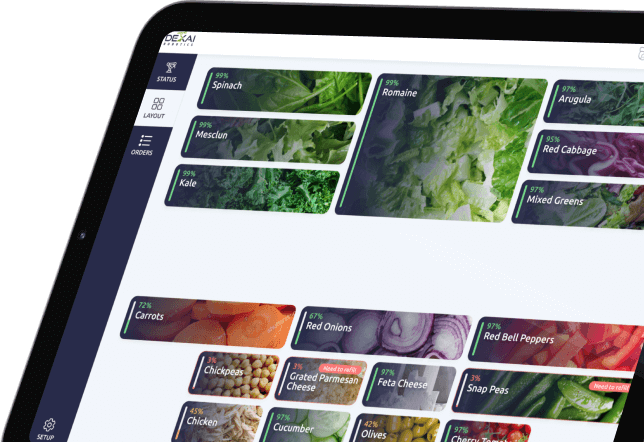


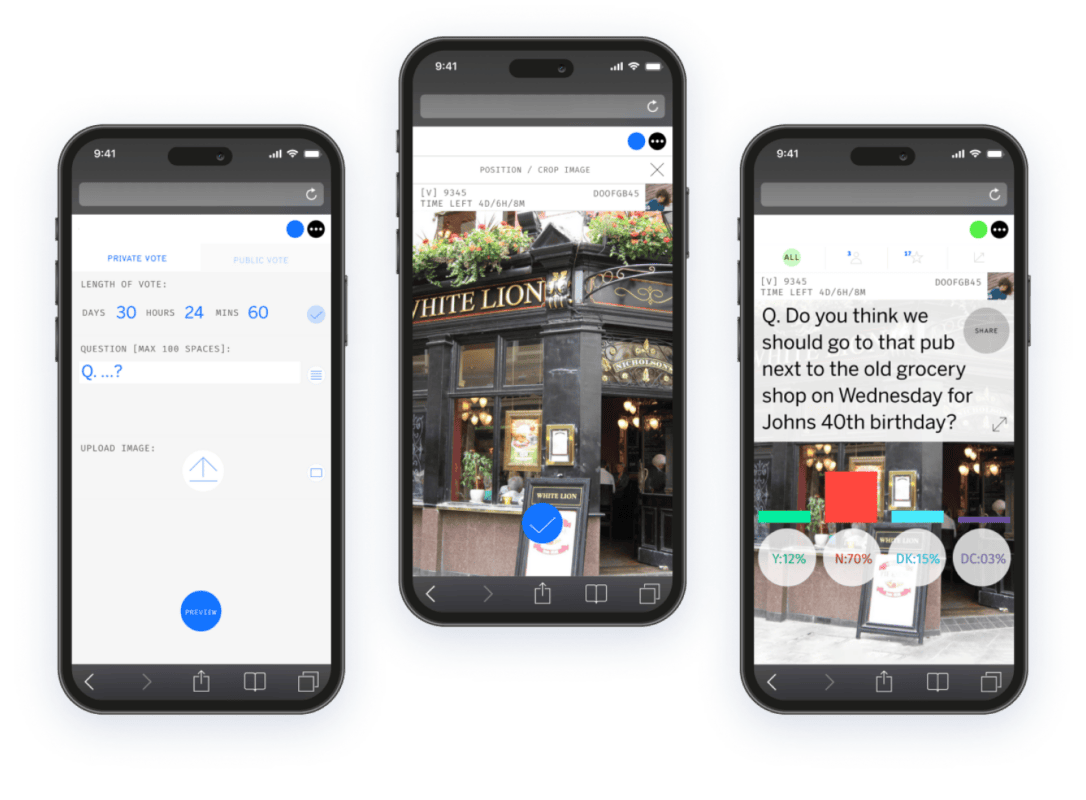
From the early stages of the project, SumatoSoft demonstrated a proactive attitude, actively seeking opportunities to enhance the solution and anticipate our needs. They consistently took the initiative to address any potential issues, provide timely updates, and offer solutions to challenges that arose during development. This proactiveness greatly contributed to the project’s success and exceeded our expectations.

Working with SumatoSoft has been an outstanding experience. Their team is not only highly skilled but also incredibly responsive, collaborative, and committed to delivering quality results. I can’t recommend them enough! Thank you team SumatoSoft for bringing my vision to life.

The system has produced a significant competitive advantage in the industry thanks to SumatoSoft’s well-thought opinions. They shouldered the burden of constantly updating a project management tool with a high level of detail and were committed to producing the best possible solution.

I was impressed by SumatoSoft’s prices, especially for the project I wanted to do and in comparison to the quotes I received from a lot of other companies.
Also, their communication skills were great; it never felt like a long-distance project. It felt like SumatoSoft was working next door because their project manager was always keeping me updated. Initially.

We tried another company that one of our partners had used but they didn’t work out. I feel that SumatoSoft does a better investigation of what we’re asking for. They tell us how they plan to do a task and ask if that works for us. We chose them because their method worked with us.

SumatoSoft is the firm to work with if you want to keep up to high standards. The professional workflows they stick to result in exceptional quality.
Important, they help you think with the business logic of your application and they don’t blindly follow what you are saying. Which is super important. Overall, great skills, good communication, and happy with the results so far.

Together with the team, we have turned the MVP version of the service into a modern full-featured platform for online marketers. We are very satisfied with the work the SumatoSoft team has performed, and we would like to highlight the high level of technical expertise, coherence and efficiency of communication and flexibility in work.
We can confidently say that SumatoSoft has put all our ideas into practice.

We are absolutely convinced that cooperation between companies is only successful when based on effective teamwork (and Captain Obvious is on our side!). But the teams may vary on the degree of their cohesion.

They are very sharp and have a high-quality team. I expect quality from people, and they have the kind of team I can work with. They were upfront about everything that needed to be done.
I appreciated that the cost of the project turned out to be smaller than what we expected because they made some very good suggestions. They are very pleasant to work with.

Rivalfox had the pleasure to work with SumatoSoft in building out core portions of our product, and the results really couldn’t have been better.
SumatoSoft provided us with engineering expertise, enthusiasm and great people that were focused on creating quality features quickly.

SumatoSoft succeeded in building a more manageable solution that is much easier to maintain. Their project management reflects the excellence of a larger company. Their team delivers high-quality results, attentive service, and reasonable pricing.

Thanks to SumatoSoft’s can-do attitude, amazing work ethic, and willingness to tackle clients’ problems as their own, they’ve become an integral part of our team. We’ve been truly impressed with their professionalism and performance and continue to work with the team on developing new applications.
We are completely satisfied with the results of our cooperation and will be happy to recommend SumatoSoft as a reliable and competent partner for development of web-based solutions

SumatoSoft is flexible, efficient, and extremely good at planning and being proactive. They have also been very proactive in their approach throughout the project, seeking to understand the needs and the reasons behind them before launching into development, which has been helpful for maintaining direction and consistency, especially because the end client is regularly generating new ideas for added features.

We brought in SumatoSoft to help us reduce unexpected turbine failures, and the result met our expectations. From the early stages, their team demonstrated a strong understanding of our business domain and the constraints of working with existing SCADA systems. They took a proactive approach, carefully analyzing our requirements and proposing a solution that enhanced our infrastructure without disrupting it. Communication was clear and structured, and the project was managed professionally, with all milestones delivered on time.

Core tech stack we work with













Idea-stage? We turn that into clickable reality.
Start with a free discovery consultation.
From MVP to enterprise scale
Buyers often worry that an MVP is only a temporary build and that real growth will require a rewrite. We avoid that problem by engineering the MVP on a production-ready foundation from day one.
We use scalable cloud infrastructure, structured service architecture, stable APIs, and CI/CD so the product can grow without being rebuilt.

Why entrust MVP development to us
Since 2012, we know software development for startups inside out. So, we adjust our MVP software development services to provide everything needed to develop your MVP application, from building a Lean Canvas to the release of a fully functioning MVP.
- You own the IP and source code
The MVP is your asset. The value should not sit in a vendor-controlled wrapper, internal platform, or hidden delivery shortcut.
- The product is built on real infrastructure
We use delivery environments and cloud architecture that support growth.
- AI guardrails are part of the build
If AI is in scope, the product ships with defined data access rules, evaluation checkpoints, logging, and abuse testing.
- One team covers product engineering and AI delivery
You do not need one vendor for the app and another for the model layer. We handle the standard product stack and AI-specific work as a single delivery path.

Awards & recognitions



Let’s start
If you have any questions, email us info@sumatosoft.com

FAQ
What is the difference between a PoC and an MVP for an AI product?
A PoC answers the technical question: Can this model or retrieval setup do the job inside your data and workflow constraints? An MVP answers the market and product question: will users adopt and pay for this workflow once it is packaged as software?
How do you estimate AI operating costs before launch?
We test model usage on a bounded dataset, estimate token and retrieval patterns, and decide where caching, routing, or smaller models should sit. The result is an operating-cost model based on the intended workflow, not guesswork.
Can you build an AI MVP with HIPAA-aligned handling or SOC 2-ready controls?
Yes. We can design the MVP around private hosting options, role-based access, logging, retention rules, tenant separation, and stricter model-provider terms. Formal audits and attestations still happen outside the product build itself.
How do you test an AI MVP if outputs vary?
We combine normal QA with dataset-based AI evaluation. The system is scored on retrieval quality, faithfulness, latency, refusal behavior, and failure modes. We also test prompt injection and other abuse scenarios before release.
How do you avoid building a thin wrapper with no moat?
By putting your value in the product logic, the data flow, the retrieval layer, the permission model, and the workflow.




